
Cart
0
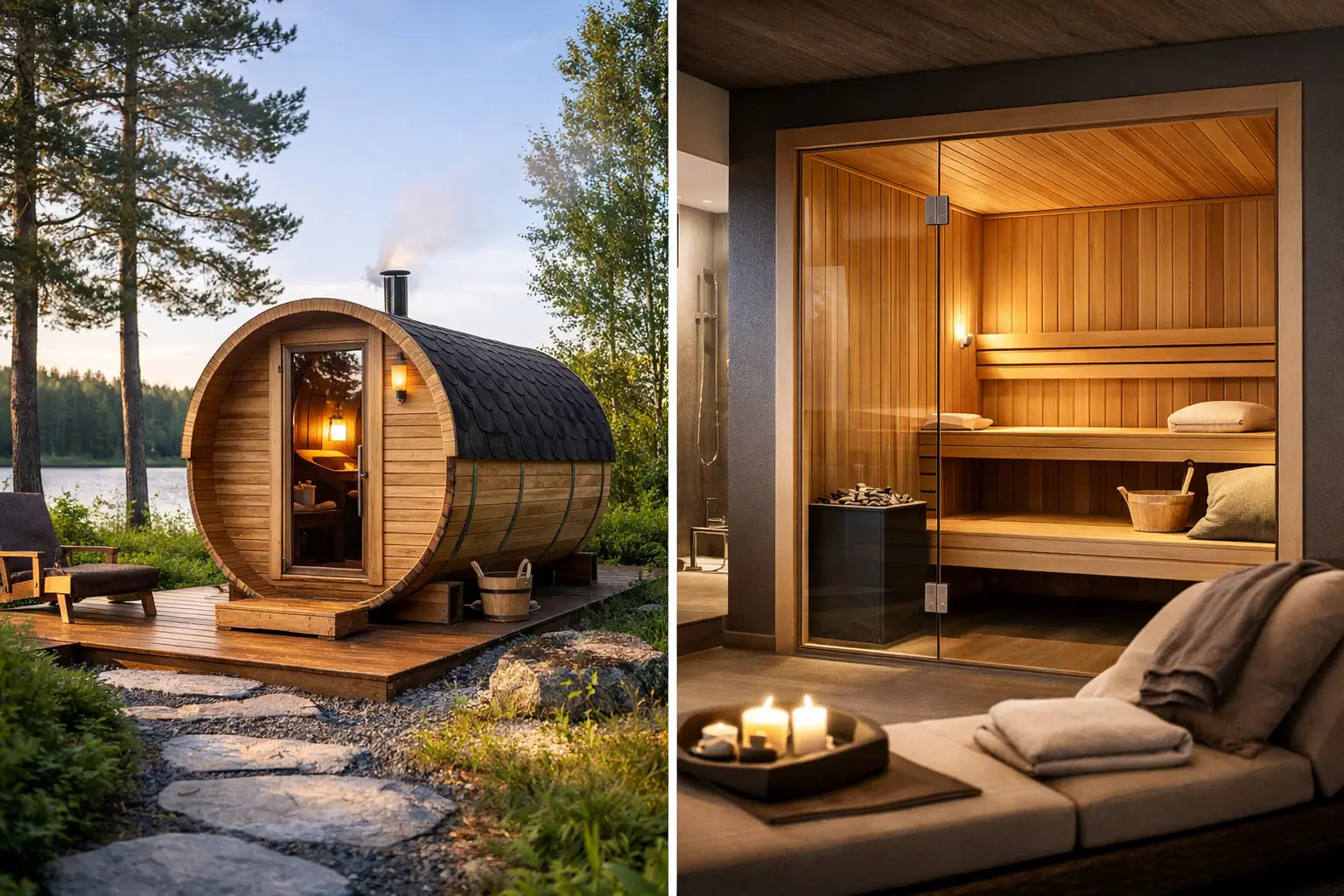
A sauna can become the most personal room on a property, even when it stands well beyond the walls of the home. The choice between an outdoor sauna vs indoor sauna is not simply about available square footage. It shapes how you arrive, how you unwind, what the ritual asks of you, and how naturally it fits into the life you want to create.
For some homeowners, the ideal session begins with bare feet on a quiet deck, steam rising into cool evening air, and a pause beneath the trees before returning indoors. For others, a thoughtfully integrated sauna steps from a primary bath, home gym, or spa suite with effortless convenience. Both can be beautiful. The right setting depends on whether you want sauna bathing to feel like a destination or an extension of your daily routine.
Outdoor sauna vs indoor sauna: start with the experience
An outdoor sauna creates a gentle sense of transition. You leave the pace of the house, walk into the landscape, and enter a warm, timber-lined space that feels set apart from everything else. That small journey is part of the value. It gives the mind time to let go of work, screens, and household distractions before the heat even begins.
This is why outdoor saunas pair so naturally with cold plunges, pool decks, garden paths, and glamping-inspired guest areas. Alternating warm sauna air with fresh outdoor air can make a simple evening feel ceremonial. In colder months, the contrast is especially memorable: the dry heat of the sauna, the crispness of the night, and the calm of returning to a robe beneath an open sky.
An indoor sauna offers a different kind of luxury. It is immediate, protected, and easy to use often. If you imagine taking a 20-minute session before your morning shower, after a workout, or before bed, an indoor location can remove friction. There is no walk through rain, no concern about cold-weather layers, and no need to build the rest of the outdoor area at the same time.
Neither experience is inherently better. Outdoor sauna bathing tends to feel more immersive and transportive. Indoor sauna bathing tends to be more convenient and integrated. The deciding question is simple: will you use your sauna more because it is close at hand, or because it gives you a reason to step outside and reset?
The outdoor advantage: a retreat in the landscape
For design-conscious homeowners, an outdoor sauna can do more than support wellness. It can anchor an entire backyard vision. A cedar sauna beside a cold plunge, a sculptural sauna near a pool, or a compact sauna tucked into a quiet garden corner gives the property a focal point with genuine purpose.
The best outdoor installations feel intentional rather than placed. Consider the view from inside the sauna, the path leading to the door, the privacy of the site, and where guests can cool down afterward. A framed view of mature trees, a planted privacy screen, or a simple gravel path can make the approach feel considered. Lighting matters, too. Soft path lighting and warm exterior illumination extend the ritual into early mornings and evenings without overpowering the landscape.
Outdoor placement also creates flexibility for homes without a spare interior room. Instead of renovating a bathroom, basement, or garage, you can establish a dedicated wellness zone where it makes the most sense. This can be especially appealing for vacation-rental hosts and hospitality properties, where a sauna becomes a distinctive guest amenity and an experience people remember.
There are practical benefits as well. An outdoor unit can simplify ventilation concerns because moisture is released outside rather than into the home. It also keeps heat, humidity, and the rhythm of sauna use separate from indoor living areas. Still, outdoor does not mean maintenance-free. The structure will be exposed to weather, changing temperatures, and seasonal debris, so quality materials, a well-prepared foundation, and proper drainage are essential.
When an indoor sauna is the wiser choice
An indoor sauna is often the right answer when ease of use is the highest priority. A well-designed sauna near a shower makes post-session rinsing simple. In a lower-level gym, primary suite, or dedicated spa bath, it can become part of an established health routine rather than a special-occasion feature.
Indoor saunas are also well suited to dense neighborhoods, homes with limited usable yard space, and regions where harsh weather may discourage outdoor use for part of the year. Although many people love the brisk walk from an outdoor sauna in winter, that experience is not for everyone. A homeowner who wants reliable daily access may prefer the certainty of an interior setting.
The trade-off is planning. Indoor installation requires close attention to electrical capacity, ventilation, heat protection, moisture management, and the surfaces surrounding the sauna. A sauna should never feel squeezed into an afterthought corner. It needs thoughtful clearances and materials that can handle warmth and humidity over time.
A successful indoor sauna can be remarkably refined, especially when it is treated as part of the architecture. Natural wood, low-glare lighting, clean lines, and a nearby shower can create a private sanctuary. Yet it may not offer the same separation from daily life that comes with walking into the garden. For some people, that difference is precisely why an outdoor sauna feels more restorative.
Installation, utilities, and long-term care
The location you choose should work with the realities of your property. Outdoor saunas typically need a stable, level base such as a concrete pad, pavers, or a properly built deck. The site should drain well and remain accessible for delivery, assembly, and future service. Electrical requirements vary by heater and sauna model, so a licensed electrician should confirm the appropriate circuit and local code requirements before installation.
With an indoor sauna, the existing room matters just as much as the sauna itself. Is there enough clearance? Can the floor tolerate the use pattern? Is there a practical route for electrical work? Will the room be properly ventilated? These are not the glamorous parts of planning, but they protect the longevity of both the sauna and the home.
Maintenance is generally straightforward when the sauna is built well and used with care. Inside, keep benches clean, allow the room to dry between sessions, and avoid leaving damp towels or accessories inside. Outdoors, periodically inspect the roof, exterior wood, seals, and surrounding drainage. Clear leaves and debris from the area, particularly in wet climates or beneath mature trees.
Material quality deserves attention in either setting. Sauna interiors should be comfortable to sit against at high temperatures and designed for repeated heat cycles. Exterior materials should be chosen for the local environment, whether that means intense sun, coastal moisture, snow, or wide temperature changes. A premium sauna is not only about the first impression. It is about how gracefully the space holds up through years of quiet use.
Design for the full ritual, not just the heat
The most satisfying sauna projects consider what happens before and after the session. An outdoor sauna may call for a cold plunge, an outdoor shower, a sheltered changing area, or lounge seating where you can rest with water or tea. An indoor sauna may benefit from a dedicated shower, towel storage, dimmable lighting, and a place to cool down without immediately returning to the demands of the house.
Privacy is another meaningful distinction. An outdoor sauna should be positioned with sightlines in mind, particularly in neighborhoods or shared properties. Fencing, layered planting, slatted screens, and careful orientation can create enclosure while preserving a connection to nature. Indoors, privacy is easier to control, but the room should still feel calm rather than clinical.
For a larger outdoor oasis, a sauna can become the warm center of a sequence: sauna, cool water, rest, repeat. That rhythm works beautifully beside a pool house, a guest studio, or a glamping accommodation. Tanari Earth approaches these spaces as environments for restoration, where each element encourages you to spend more time relaxing in nature.
How to make the decision
Choose an outdoor sauna if you want your wellness practice to pull you into the landscape, if you have room for a dedicated retreat, and if you value the sensory contrast of heat, fresh air, and sky. It is particularly compelling for properties where entertaining, hosting, or a resort-like backyard experience is part of the vision.
Choose an indoor sauna if frequent convenience matters most, if your home already has a suitable spa, gym, or bathroom area, or if outdoor space is limited. It can be the better fit for a tightly organized routine and for homeowners who prefer a fully protected, all-weather route to relaxation.
Budget should account for more than the sauna itself. Include site preparation, electrical work, delivery access, permits where required, and the supporting features that make the experience feel complete. Sometimes an indoor installation costs less because utilities are nearby. In other cases, renovating an interior room becomes more involved than preparing a simple outdoor foundation. A site-specific plan is more useful than a broad assumption.
The best sauna is the one that invites regular use. Picture the ordinary Tuesday evening, not only the perfect weekend. If the thought of walking through the garden makes you exhale, build the retreat outside. If the luxury of stepping from shower to heat feels like the habit you will keep, bring the ritual indoors. Either way, give the space enough care that it becomes a place you look forward to returning to, season after season.

