
Cart
0
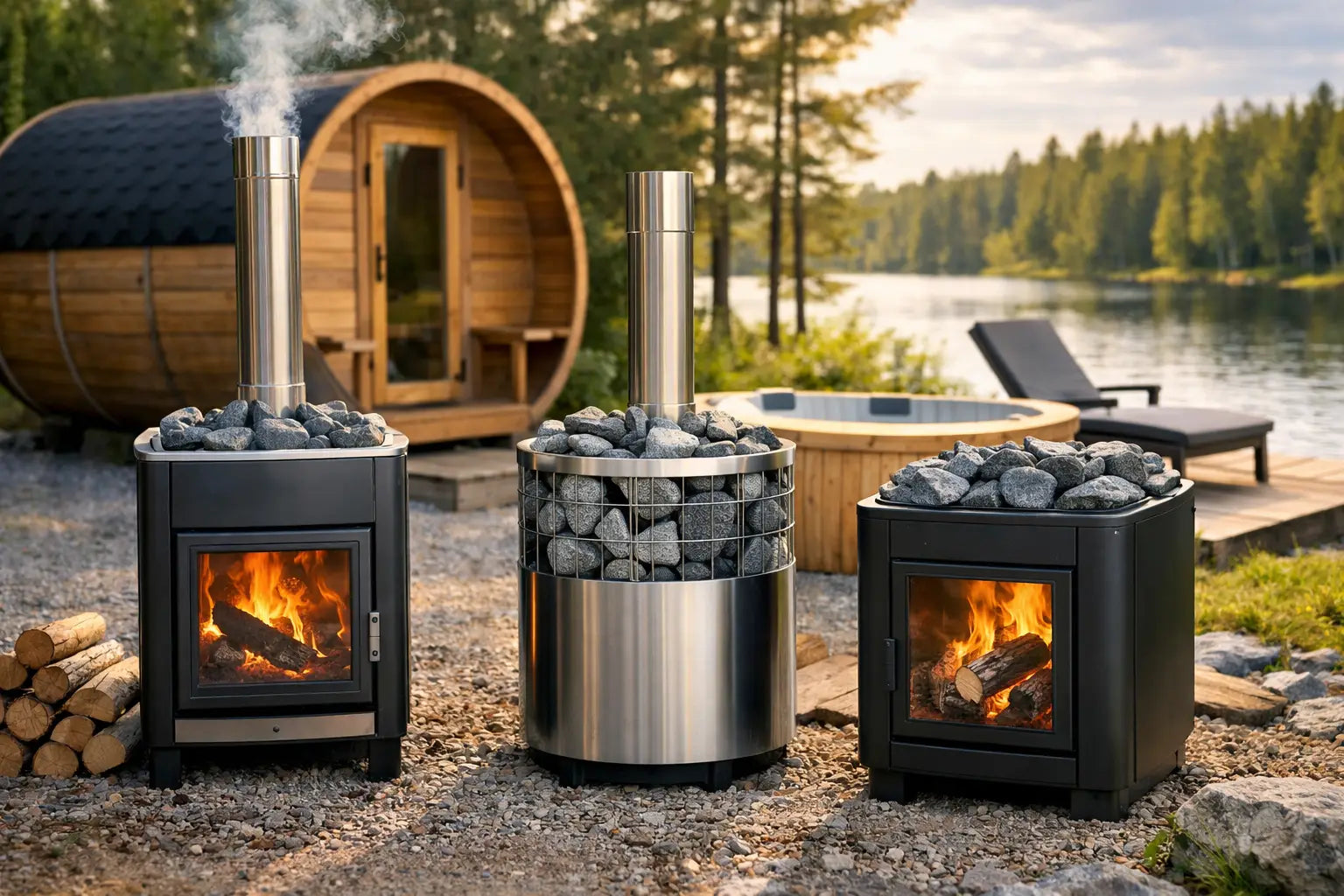
A sauna’s heat shapes the entire ritual. It determines whether your evening begins with the soft crackle of firewood or the quiet certainty of a preheated room, how naturally the sauna sits within its landscape, and how much preparation the experience asks of you. The best outdoor sauna heater options are not simply about reaching temperature. They are about choosing the pace, atmosphere, and stewardship that suit your retreat.
For a private backyard oasis, a design-forward guest stay, or a glamping property where every detail carries weight, the right heater should feel considered from the first step outside to the final cool-down beneath the trees.
The Outdoor Sauna Heater Options That Matter Most
For most outdoor sauna projects, the decision comes down to wood-fired or electric heat. Both can create an exceptional traditional sauna experience, especially when paired with a well-built insulated cabin, generous stone capacity, and a setting that invites you to linger. Gas heaters also have a place in select commercial or hospitality applications, though they are less common for refined residential sauna installations.
The better choice depends on how you want to use the space. A wood stove makes a sauna session feel slower and more elemental. An electric heater brings convenience, consistency, and a clean architectural look. Neither is universally better. The most satisfying choice is the one that fits your property, your routines, and the character of the retreat you are building.
Wood-fired heaters: the ritual of living heat
A wood-fired sauna heater is often the emotional center of an outdoor sauna. The fire takes time to build, the stove gradually warms the room and stones, and the scent of woodsmoke becomes part of the setting. For homeowners who see sauna bathing as an unhurried ritual, that preparation is not a drawback. It is the beginning of the experience.
Wood heat is especially at home in a forested property, a cabin-style sauna, or a landscape designed around natural materials. The stove’s visible flame and the sound of a fire can make even a compact sauna feel deeply restorative. It also offers independence from electrical service, which can be valuable on rural land or in locations where running a high-amperage circuit would be complex.
There are practical considerations, of course. A wood-fired heater requires a properly installed chimney system, appropriate wall and floor protection, clearance from combustible materials, and a reliable supply of dry seasoned wood. It asks for more hands-on attention than an electric unit, and it creates ash that must be managed. On some properties, local fire restrictions, neighborhood smoke concerns, or insurance requirements may influence the decision.
When these details are planned well, a wood heater offers something difficult to replicate: a sauna that feels connected to the season, the weather, and the land around it.
Electric heaters: effortless, precise, and polished
Electric sauna heaters are the natural choice for people who want their wellness routine to fit gracefully into a busy day. With the press of a control, the sauna begins to warm while you finish dinner, set out towels, or prepare for a cold plunge. Many electric models offer wall-mounted or remote controls, scheduling capability, and dependable temperature management.
For a contemporary outdoor sauna near the home, an electric heater can be especially appealing. There is no firewood to store, no ash to clean, and no chimney rising above the roofline. The visual effect is calm and minimal, allowing the architecture, timber, and surrounding garden to take the lead.
The trade-off is infrastructure. Most full-size electric heaters require a dedicated 240-volt circuit, and the heater must be sized correctly for the sauna’s interior volume. Electrical work should be completed by a qualified professional, with attention to local code, disconnect requirements, and outdoor conditions. If your sauna is far from the main electrical panel, trenching and service upgrades can become a meaningful part of the project budget.
Electric heat is often ideal for a primary residence, a design-conscious backyard, or a hospitality property where consistent guest operation matters. It favors ease without sacrificing the satisfying heat and steam of a traditional stone sauna.
Gas heaters: practical for certain larger settings
Gas-fired sauna heaters are less frequently chosen for private outdoor saunas, but they can make sense in larger, high-use environments. A hospitality property, fitness facility, or retreat with existing natural gas or propane infrastructure may appreciate their quick recovery and lower operating effort compared with tending a wood fire.
That said, gas installations require careful planning around fuel supply, ventilation, combustion safety, and local permitting. The available heater styles may also be more limited than wood-fired and electric alternatives, particularly for a small luxury sauna intended to feel intimate and residential. For many homeowners, electric provides a simpler version of convenience, while wood offers more atmosphere.
Choose Heater Size Before Choosing Features
A beautiful heater that is undersized for the room will leave every session feeling compromised. One that is excessively large can create an overly harsh heat cycle and may be harder to manage comfortably. Sizing is one of the most consequential decisions in any outdoor sauna heater plan.
Start with the sauna’s interior dimensions, not its exterior footprint. Measure length, width, and ceiling height to determine cubic footage. Then account for heat loss from glass doors, windows, uninsulated surfaces, and masonry or stone elements. A sauna with expansive glazing toward a beautiful view may need more heating capacity than a fully insulated cedar cabin of the same size.
Climate matters too. In a mild coastal setting, a properly insulated sauna may perform beautifully with modest capacity. In a snowy mountain location or an exposed, windy site, extra capacity can help the sauna heat efficiently through the colder months. The goal is not simply a high temperature reading. It is a room that warms reliably, holds heat well, and gives bathers a soft, even löyly when water meets the stones.
Stone Capacity Changes the Feel of the Heat
Heater output gets much of the attention, but stone capacity deserves equal consideration. Stones store heat and release it gradually, creating the enveloping warmth associated with a traditional sauna. They also make steam possible when a small ladle of water is poured over the heater.
A larger stone mass generally creates a gentler, more lingering heat experience. It can be particularly lovely for longer sauna sessions, shared bathing, and spaces designed around relaxation rather than quick heat-up times. Compact heaters with fewer stones may warm quickly, but their heat can feel sharper and less forgiving.
This does not mean every sauna needs the largest possible heater. In a small two-person cabin, scale and proportion matter. Choose a heater with enough stones to support a satisfying steam ritual while preserving comfortable bench space and circulation.
Design, Placement, and Safety Belong Together
In an outdoor sauna, the heater is both a functional appliance and a visual anchor. Its placement influences bench layout, door swing, sightlines, and the feeling of arrival when you enter the room. A wood stove may create a warm focal point near the entry, while an electric heater can sit discreetly along a wall or beneath a guard designed to complement the interior woodwork.
Safety requirements should guide the design from the earliest sketch. Every heater has manufacturer-specified clearances, ventilation needs, and protective requirements. A noncombustible hearth, heat shields, sauna-rated wiring, proper guards, and correctly placed lighting all support a room that feels peaceful because it is thoughtfully built.
For outdoor structures, also consider the route between home and sauna. A sheltered path, warm exterior lighting, a place for robes, and proximity to a cold plunge or outdoor shower can turn a heater decision into part of a complete wellness circuit. Tanari Earth approaches these spaces as outdoor rooms for restoration, where the pause between heat and cool air is as memorable as the sauna itself.
Consider the Ownership Experience
Before committing, picture a winter Thursday evening rather than a special occasion. Do you want to light a fire, check the stove, and let anticipation build as the cabin warms? Or would you rather begin heating the sauna from indoors and step into a ready room when the day is done?
Wood-fired heat rewards presence. Electric heat rewards frequency. Gas can serve higher-volume use where fuel infrastructure is already in place. Your choice should support the ritual you will actually keep, not the one that only sounds appealing on paper.
A heater is a long-term part of your property, so allow room in the budget for the full installation: electrical service or chimney components, safety materials, labor, ventilation, and any site work. A carefully matched heater protects the investment in the sauna itself and makes every session feel effortless in the ways that matter.
The finest outdoor sauna is not necessarily the hottest or most complex. It is the one that gives you a reason to step outside, leave the day behind, and spend more time restoring yourself in nature.

