
Cart
0
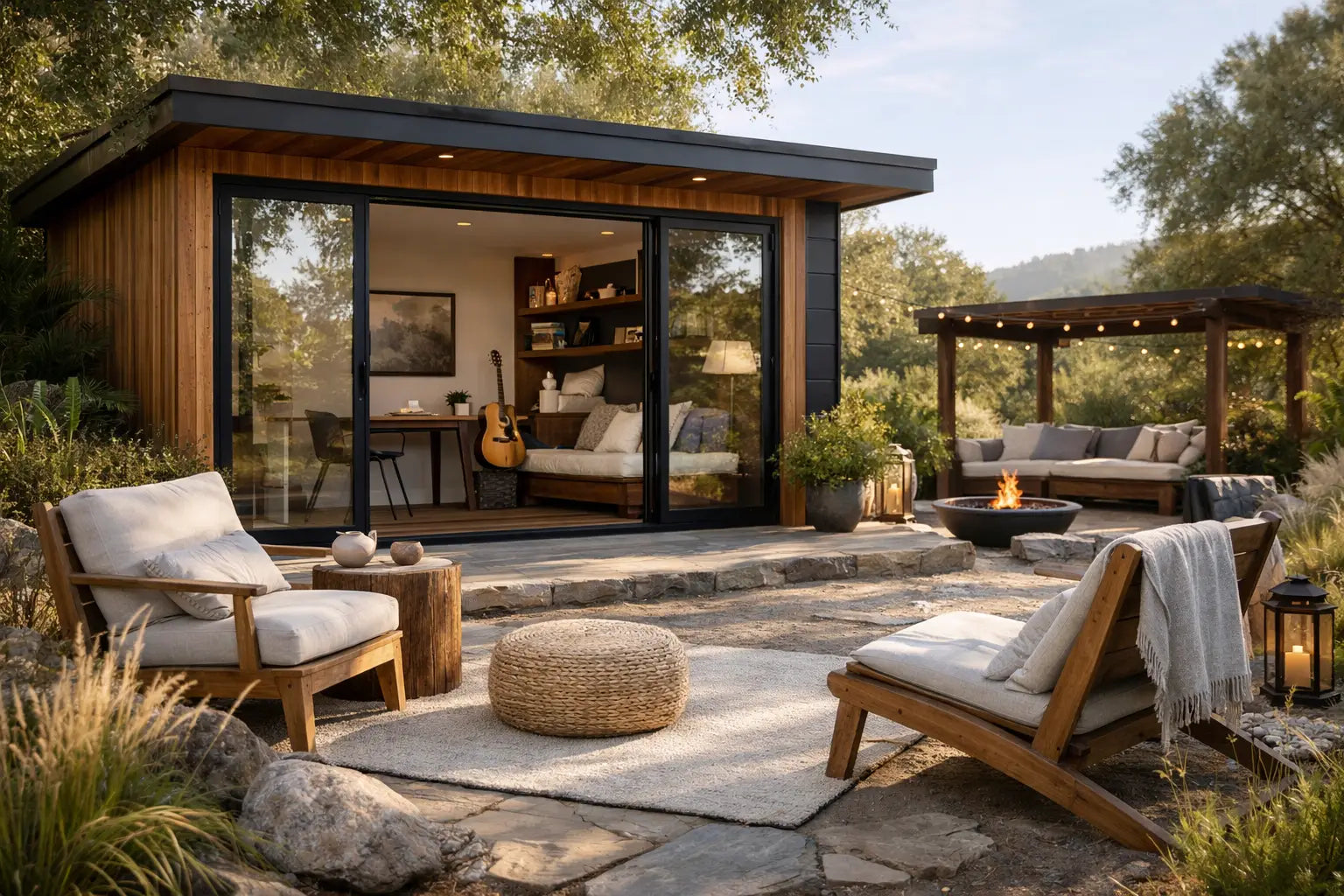
A well-designed outdoor studio changes more than the view from your property. It creates a reason to step outside with purpose: to work with greater focus, make something by hand, move your body, host a guest, or simply enjoy a quiet hour close to the landscape. When considering how to design an outdoor studio, begin with the feeling you want to return to, not just the square footage you need.
The most memorable studios are not oversized houses placed in the yard. They are intentional rooms with a clear role, a sense of privacy, and enough comfort to make time outdoors feel effortless in every season.
Start With the Ritual, Not the Floor Plan
Before selecting a structure, name the primary experience your studio should support. A creative studio needs generous daylight, storage, and surfaces that can handle a little mess. A backyard office benefits from acoustic separation, reliable power, and a composed video-call backdrop. A movement or wellness room may call for open floor space, soft lighting, fresh air, and a nearby sauna or cold plunge ritual.
Many spaces can serve more than one purpose, but every studio needs a first priority. Designing for a vague “extra room” often leads to a beautiful structure that is not quite right for anything. Instead, picture an ordinary Tuesday in the space. Where do you set down a bag? What do you see from your chair? Do you need a desk, a daybed, a worktable, or enough open floor for a yoga mat?
Write a short design brief before you shop or draw plans. Include the room’s main use, the number of people it should comfortably hold, the seasons you intend to use it, and what must be stored out of sight. This small exercise will clarify size, layout, utilities, and budget far faster than collecting more inspiration images.
Choose the Site With Care
The right location can make a compact studio feel expansive. Walk your property at different times of day and pay attention to sun, wind, sound, drainage, and sightlines. Morning sun may be ideal for a writing room or meditation space, while softer northern light can be especially welcome in an art studio. In hot climates, a west-facing wall without shade can turn a glass-filled room into an afternoon challenge.
Privacy matters, too. A studio should feel distinct from the main house without becoming isolated or difficult to reach. Consider the path from your door to the studio. A short walk through a garden, along decomposed granite, or beneath a canopy of trees can create a gentle transition from daily obligations to personal time. The path should also be practical in rain, at night, and when carrying supplies.
Look beyond the view directly in front of the building. Place windows where they frame a mature tree, garden bed, distant ridge, or changing sky rather than a fence, utility area, or neighboring window. If the best view brings too much exposure, use native planting, slatted screens, or a covered porch to create a layer of refuge.
Respect Water, Roots, and Local Rules
A beautiful site is not always a buildable one. Avoid low points where water gathers, protect mature tree root zones, and understand access for deliveries and construction. Soil conditions, slopes, wildfire considerations, setbacks, easements, and utility locations can influence both placement and cost.
Local requirements vary widely. Depending on your studio’s size, foundation, electrical service, plumbing, intended use, and whether it could function as an ADU, permits may be required. Confirm those details early with your local planning and building departments. It is much easier to refine a concept at the beginning than to redesign a nearly finished project.
How to Design an Outdoor Studio for All Seasons
A studio that only feels comfortable on perfect spring days will sit empty too often. Four-season comfort is an investment in use, and use is what gives the project its value.
Start with the building envelope: insulation, high-quality windows, weather sealing, and a roof designed for your local climate. Large windows are lovely, but too much unshaded glass can create glare, heat gain, and a loss of privacy. The balance depends on your site. Consider operable windows on more than one wall for cross-ventilation, then add exterior overhangs, shades, or deciduous trees where summer sun is strongest.
Heating and cooling should be appropriately sized for the structure rather than treated as an afterthought. A quiet mini-split system is often a strong choice for a finished backyard room, while ceiling fans can improve comfort and reduce reliance on mechanical cooling. In colder regions, radiant flooring can bring a particularly grounded sense of warmth, though it adds complexity and is best planned before the floor is installed.
Do not overlook lighting. Use layered light instead of relying on a single bright overhead fixture. A mix of dimmable ambient lighting, focused task lighting, and low-level exterior path lighting makes the studio welcoming from early morning through evening. Warm color temperatures tend to feel calmer and more residential than stark white light.
Let Materials Make the Space Feel Grounded
An outdoor studio does not need to imitate a cabin or a garden shed to belong in nature. It simply needs materials that feel honest, tactile, and well considered. Wood cladding, stone, plaster-like finishes, linen window treatments, and natural fiber rugs can soften the transition between indoors and outdoors.
Choose materials based on both beauty and maintenance. Cedar and thermally modified wood can age gracefully, but will still need thoughtful detailing around moisture and sun exposure. Metal roofing is durable and often well suited to fire-conscious regions, though rain sound and insulation should be considered. Composite cladding may offer lower maintenance in demanding climates, but its visual character should complement the architecture of your home and landscape.
Inside, resist the urge to overfill the room. A limited palette allows light, views, and texture to do more of the work. Built-in cabinetry can conceal office equipment, art materials, towels, or wellness accessories while preserving a quiet visual field. If the room is small, select one or two substantial pieces rather than several undersized furnishings.
Create an Arrival, Not Just an Entrance
The few feet around an outdoor studio shape how it feels to use. A small deck, gravel courtyard, or covered threshold gives you a place to pause before stepping inside. It also creates space for muddy shoes, a bench, potted herbs, or a towel hook after a cold plunge.
This is where a studio can become part of a larger outdoor wellness setting. Place it near a sauna for a private recovery suite, beside a plunge pool for a restorative circuit, or at the edge of a garden where the scent of rosemary and the sound of leaves become part of the room. The goal is not to add every feature at once. It is to create a sequence that invites you to slow down.
Landscape with the building, not after it. Native grasses can soften a foundation. Evergreen planting can provide year-round privacy. A small tree may eventually offer shade to a west-facing wall. Leave room for maintenance access, and choose plants suited to the water and care your property can realistically provide.
Plan Utilities Around Real Life
Even a simple studio benefits from a clear utilities plan. At minimum, you may need electrical service for lighting, outlets, heating and cooling, and internet. If the space will support hospitality, fitness, or extended workdays, consider whether a sink, beverage station, or nearby restroom will materially improve the experience.
Reliable connectivity deserves special attention for an office or rental setting. Test Wi-Fi at the proposed location before construction. A mesh network may be enough for some properties, while a hardwired connection is often more dependable for video calls and smart climate controls.
Keep technology present but visually quiet. Concealed outlets, integrated charging, organized cable routes, and storage for routers or speakers protect the calm atmosphere you worked to create.
Design for a Life You Will Actually Use
The most luxurious detail in an outdoor studio is not necessarily a dramatic window wall or custom finish. It is the ease of entering and settling in. A dedicated place for shoes, a comfortable chair facing the garden, a durable surface for tea, and a blanket stored within reach can turn a polished structure into a personal ritual.
At Tanari Earth, we think of outdoor spaces as invitations to spend more time relaxing in nature. Let your studio hold that invitation in a form that fits your life. Build for the work, rest, creativity, or connection you want more of, then give yourself a reason to walk out there tomorrow.

