
Cart
0
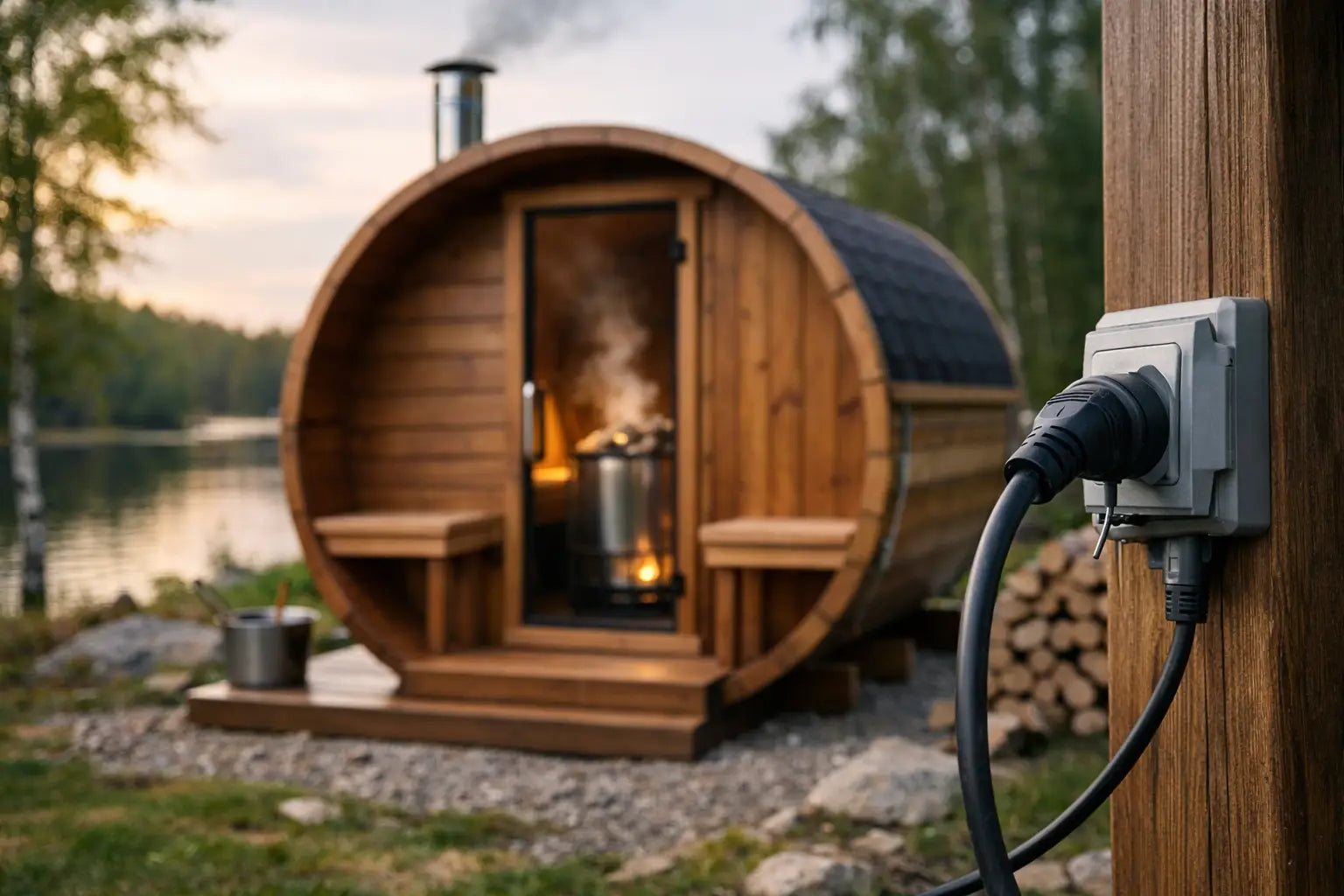
A sauna can turn an ordinary evening outside into a ritual: the scent of cedar, a quiet walk across the garden, heat gathering around you while the air beyond the door cools. But before choosing the view, the wood species, or the shape of the sauna, many homeowners ask: do outdoor saunas need electricity?
The short answer is no, not always. A wood-fired outdoor sauna can operate without a power connection. An electric sauna heater, on the other hand, requires dedicated electrical service. The more useful answer is that electricity affects far more than heat. It shapes where your sauna can sit, how quickly it is ready, what the installation involves, and how autonomous you want your retreat to feel.
For a refined backyard wellness space, the best choice is less about a universal rule and more about the rhythm you want your sauna to support.
Do Outdoor Saunas Need Electricity for Heat?
An electric sauna needs electricity because its heater converts electrical energy into dry, steady heat. Most traditional electric heaters are hardwired, often on a 240-volt circuit, and should be installed by a licensed electrician according to local code and the heater manufacturer’s requirements. The heater size, sauna volume, insulation, window area, and climate all influence the electrical load.
Electric heat is the natural choice for owners who want simple, repeatable sessions. With a timer or connected control, you can begin preheating before a workout, a cold plunge, or the end of a long day. The temperature is easy to maintain, and there is no firewood to store, ash to remove, or chimney to tend. For a vacation rental or hospitality setting, those operational advantages can be especially valuable. Guests often appreciate an experience that feels effortless without needing instructions on building and managing a fire.
A wood-fired sauna does not need electricity to create heat. Its stove heats stones and the sauna cabin through a contained fire, creating a distinctly elemental experience. You build the fire, listen to the crackle, and adjust the session through airflow and fuel. In a well-designed cabin, throwing water over hot stones creates the soft, enveloping steam known as löyly.
That independence makes wood-fired models compelling for remote parts of a property, off-grid retreats, and anyone drawn to a slower, more hands-on ritual. It also comes with real responsibilities. You need dry firewood, safe clearances, appropriate chimney installation, regular ash removal, and attention while the stove is operating. Heat-up times can vary with outdoor temperature, stove capacity, wood quality, and how the sauna is insulated.
Electricity Still Matters in a Wood-Fired Sauna
“Off-grid” does not have to mean completely without power. A wood-fired sauna can heat beautifully with no electrical connection, yet many owners still choose electricity for comfort and convenience.
Interior and exterior lighting are the most common additions. Soft, low-glare lighting makes evening sessions safer and allows the sauna to feel intentional after sunset. You may also want a small outlet nearby for maintenance, a pathway light, a frost-protection feature in an adjacent changing room, or a water pump if your sauna area includes an outdoor shower or cold plunge.
Ventilation is another consideration. A traditional wood sauna should have carefully planned passive ventilation regardless of whether power is available. In some designs or climates, a powered fan may be useful, but it is not automatically required. The sauna’s layout, air intake, exhaust placement, and stove specifications should guide the decision.
For many properties, the most appealing middle ground is a wood-fired sauna with a modest electrical run for lighting and nearby amenities. You retain the romance and resilience of a live-fire sauna while making the surrounding oasis easier to enjoy year-round.
Electric, Wood-Fired, or Hybrid: Choose by Ritual
The question is not simply which option is better. It is what kind of relationship you want with the space.
Choose an electric heater if your ideal sauna is ready on a schedule. It suits a polished home wellness routine, frequent use, and locations where running power is straightforward. Electric heat is also a practical fit when a sauna is part of a larger backyard composition with a cold plunge, outdoor shower, studio, or entertaining area. One coordinated electrical plan can support the full experience.
Choose wood-fired heat if the sauna itself is meant to be a destination. It asks you to slow down before you enter. Gathering wood, lighting the stove, and waiting for the room to warm can become part of the restoration, rather than a delay before it. This style is particularly at home among mature trees, broad rural views, or a quiet edge of the property where a power trench would feel intrusive or costly.
A hybrid approach can also make sense, though it should be planned with care. This might mean a wood-fired sauna supported by electric lighting and an adjacent plunge, or an electric sauna paired with a wood-burning fire feature outdoors. The goal is not to add every amenity. It is to create a setting where each element feels considered.
Plan the Electrical Run Before You Choose the Site
An outdoor sauna can look beautifully secluded while still being practical to install. The challenge is that distance from the main electrical panel adds cost. Trenching, conduit, wire sizing, a subpanel, disconnect requirements, and ground-fault protection can all become part of the project. Rocky terrain, existing hardscape, roots, slopes, and long runs across a large property may complicate the work further.
For an electric sauna, involve an electrician early, ideally before a final site is chosen. Share the heater model or its anticipated kilowatt rating, the distance from the panel, and any other equipment planned for the same zone. A cold plunge chiller, lighting, outlets, changing-room heater, and irrigation controls may each need power. Planning the entire outdoor wellness area at once often prevents a beautiful space from being limited by an undersized circuit later.
Your local building department may also have permit requirements for electrical work, detached structures, stove chimneys, setbacks, and fire safety. These rules vary by municipality and by property conditions. A premium installation should never rely on assumptions, particularly near property lines, trees, decks, or wildfire-prone landscapes.
Can Solar Power an Outdoor Sauna?
Solar can support selected sauna-area features, but a standard electric sauna heater demands a substantial amount of power. Running one entirely from solar usually requires a carefully engineered system with enough panels, inverter capacity, and battery storage to handle a high electrical load. This is possible in certain off-grid builds, but it is rarely the simplest or most economical route for a residential sauna.
Solar lighting, low-voltage pathway lights, and small accessory loads are much more attainable. If energy independence is a central priority, a wood-fired sauna is usually the more direct path to reliable heat without relying on the grid. You can then use a modest solar setup for ambiance and practical lighting.
The Details That Matter Beyond Power
Whether your sauna is electric or wood-fired, its performance depends on more than the heat source. A thoughtfully insulated cabin will warm more efficiently and hold heat more comfortably. Well-fitted doors, appropriate ventilation, durable roofing, and materials suited to changing weather protect the experience over time.
Think about the approach, too. The walk from your home to the sauna can be a small transition out of the day. A stable path, subtle lighting, a place to hang robes, and a nearby bench for cooling down can make the space feel more generous. If you plan to pair sauna heat with cold water therapy, leave room for circulation, towels, drainage, and privacy.
There is also a practical difference between a sauna used twice a month and one used four times a week. Frequent users often value electric convenience. Occasional users may welcome the ceremony of wood heat. Neither is more authentic. The right choice is the one that makes you want to step outside and use it.
At Tanari Earth, we see the most memorable outdoor wellness spaces as personal retreats rather than isolated products. The sauna may be the anchor, but the feeling comes from the full setting: the warmth, the landscape, the materials underfoot, and the pause you make for yourself.
Before committing to a heat source, stand where the sauna may live. Notice the sun, the prevailing wind, the privacy, and the path back to the house on a dark winter evening. That small act of imagining the ritual often makes the electricity question much easier to answer.

