
Cart
0
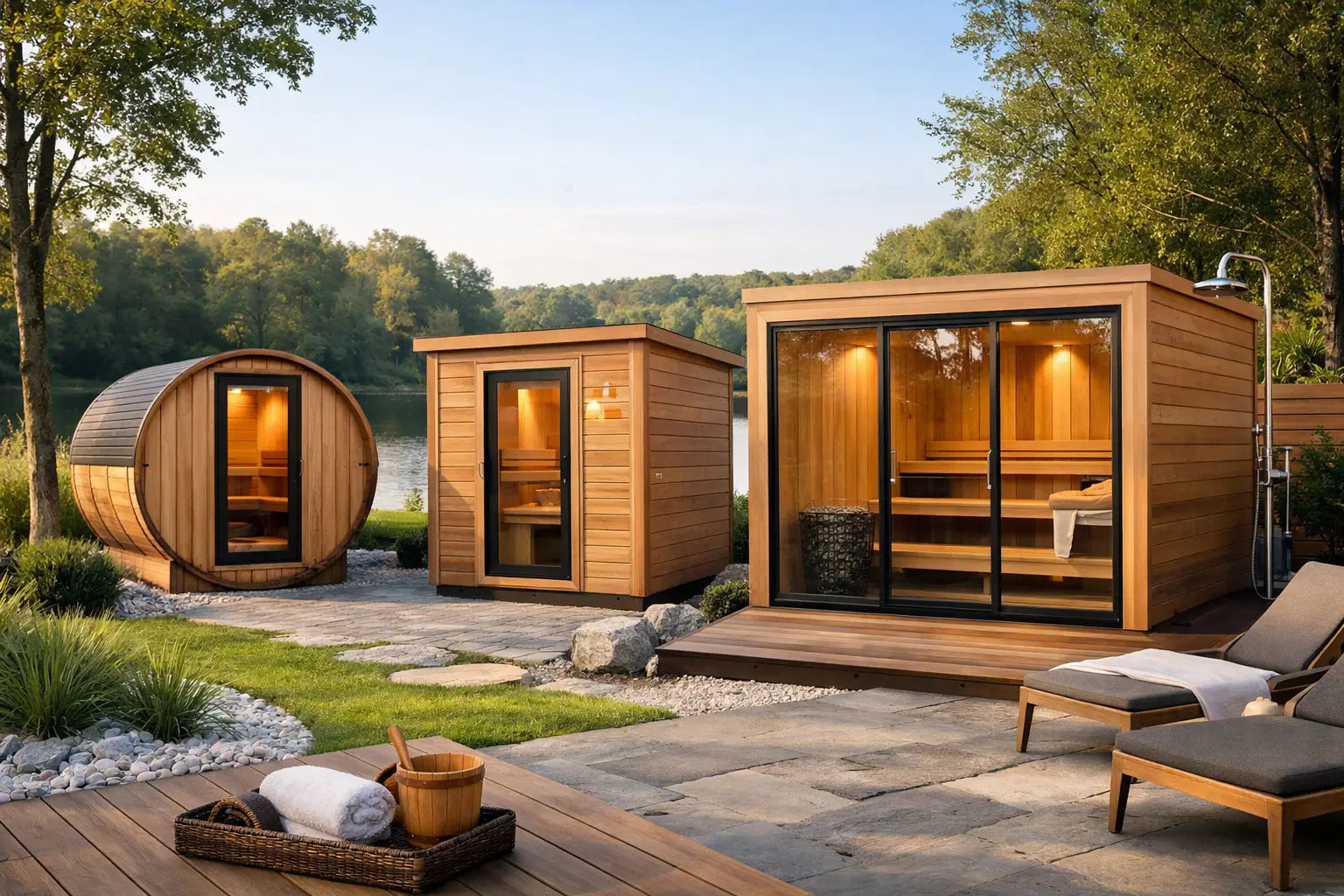
A sauna that looks perfect in a product photo can feel surprisingly cramped once two people are trying to settle in, towels are hanging nearby, and the door needs room to open. Knowing how to choose outdoor sauna size starts with a more personal question: what kind of ritual do you want to create outside?
For some, the ideal sauna is a quiet two-person retreat at the edge of the garden. For others, it is the warm center of a weekend gathering, paired with a cold plunge and a view of the trees. The right footprint is not simply the biggest one that fits. It is the size that makes your outdoor wellness space feel effortless to use, beautiful to inhabit, and proportionate to the property around it.
Begin With How You Will Use the Sauna
Capacity is the natural starting point, but it should not be the only one. Think about who will actually sauna together on an ordinary Tuesday evening, not only during a holiday weekend. A compact two-person sauna can be deeply luxurious for a couple or solo bather who wants room to recline. A four-person model is often a comfortable choice for a family, close friends, or a property where the sauna will be part of a regular hosting routine.
Larger six-person and eight-person saunas make sense when social bathing is central to the experience. They are especially compelling beside a pool house, at a vacation rental, or within a glamping setting where guests expect an amenity that feels generous. Yet a larger cabin requires more than extra square footage. It needs a setting that supports circulation, privacy, electrical planning, and a heater sized to warm the increased interior volume.
One useful rule is to choose for your usual group, then leave a little room for the occasional guest. Buying a sauna sized only for peak entertaining can leave a small backyard feeling overbuilt. Buying only for solo use may feel limiting when the people you love want to join you.
How to Choose Outdoor Sauna Size by Capacity
Sauna capacity labels can be helpful, but they are not always a complete picture of comfort. A manufacturer may describe a sauna as seating four adults, but the bench layout, ceiling height, door placement, and whether bathers can recline will determine how spacious it feels.
One- and two-person saunas
These smaller designs are ideal for intimate courtyards, terraces, and garden corners. They generally need the least site preparation and can create a focused, low-maintenance wellness ritual. If your priority is a private evening reset after work, a compact sauna can feel more cocooning than constrained.
The trade-off is flexibility. In a two-person sauna, there may be limited space to stretch out or store bathing essentials, and a third guest is rarely comfortable. Pay close attention to bench length if lying down is part of your sauna practice.
Three- and four-person saunas
For many homeowners, this is the sweet spot. A four-person sauna has enough room for two people to lounge comfortably or for a small group to sit without feeling packed in. It also gives the structure more visual presence, making it a natural anchor for a dedicated wellness zone with a shower, cold plunge, or seating area nearby.
This size is often well suited to design-conscious homes because it balances hospitality with restraint. It can feel substantial without dominating the landscape.
Six-person and larger saunas
A larger outdoor sauna is best treated as a destination, not an accessory. It is an excellent fit for hosts, multigenerational families, boutique stays, and properties designed around shared experiences. The interior should offer genuine breathing room, ideally with tiered benches so guests can choose their preferred heat level.
Be realistic about usage. A sauna that regularly welcomes six or more people needs a clear path from the home or changing area, places to cool down afterward, and enough outdoor room that guests are not standing awkwardly in a narrow passage. At this scale, the whole sequence matters: arrive, change, warm up, cool down, rest, and repeat.
Measure the Site, Not Just the Sauna
The dimensions listed for a sauna describe the building itself. Your outdoor plan must account for the space around it as well. Before selecting a model, mark the proposed footprint on the ground using stakes, tape, or even outdoor furniture. Walk around it. Open an imaginary door. Picture carrying towels, firewood if applicable, or a tray of tea through the area.
Allow room for a stable foundation, access for installation and servicing, and an inviting approach. The entry should not open directly onto a fence, steep slope, or crowded garden bed. A modest buffer around the structure also helps it look intentional rather than squeezed into place.
Privacy deserves equal consideration. The most restorative sauna is one you feel comfortable using. Look at sightlines from neighboring windows, second-story rooms, driveways, and guest areas. A thoughtful placement can frame a garden, stand of trees, or distant view while screening the bathers within.
If you are creating a broader retreat, leave enough room for the moments between heat sessions. A cold plunge, outdoor rinse shower, lounge chairs, or a small deck can transform a sauna from a standalone structure into a ritual space. This is where a slightly smaller sauna paired with a more generous surrounding setting can be the better choice.
Let Bench Layout Guide Your Decision
Interior square footage does not always translate to usable comfort. Look closely at the benches. Straight benches along one wall tend to maximize seating in a narrow footprint, while L-shaped or opposing benches can make conversation easier and allow more relaxed positioning.
Upper and lower benches are particularly valuable in medium and large saunas. Heat rises, so the upper bench offers a more intense experience, while the lower level gives guests a gentler option. This layered layout lets different preferences coexist without anyone feeling pressured to leave early.
Ceiling height also shapes the experience. A sauna should feel warm and enveloping, but not low or confined. Proper proportions support heat circulation and give taller bathers a more comfortable place to sit. If you are comparing similarly sized models, bench depth and vertical space may matter more than an extra few inches of exterior width.
Plan for the Heater, Power, and Foundation
Size affects the practical build as much as the atmosphere. Larger saunas have more air to heat and typically require a more powerful heater. That can influence electrical needs, operating costs, and the location of your power connection. It is wise to confirm local requirements and work with qualified professionals for electrical and site preparation decisions.
Your foundation must be level, durable, and sized for the full structure. Depending on the sauna and site, that may mean a concrete pad, pavers, a reinforced deck, or another engineered base. Do not overlook drainage. Water from rain, snow, and cooling-off routines should move away from the sauna rather than pooling at the entry.
A larger sauna also carries more visual weight. On a compact lot, placing it near an existing wall, mature planting, or a purposeful deck can help integrate the form. On an expansive property, it may be more compelling to place it farther from the house, creating a small journey into the landscape.
Consider Your Property's Next Chapter
An outdoor sauna can be a lasting investment in how a property feels. If you anticipate hosting more often, building a guest suite, or operating a vacation rental, a size with modest extra capacity may serve you well. For hospitality settings, comfortable group use can elevate reviews and encourage guests to slow down on the property.
Still, future-proofing does not always mean sizing up. A beautifully placed two- or four-person sauna can be more valuable than a large unit that overwhelms the setting or becomes expensive to heat for a single bather. Consider the long-term rhythm you want: private restoration, intimate connection, or shared retreat.
At Tanari Earth, we see the most memorable outdoor spaces built around intention rather than excess. The sauna becomes part of a larger invitation to spend more time outside, to pause between responsibilities, and to reconnect with the natural setting just beyond the door.
Before making your final choice, stand in the proposed location at the time you expect to use it most. Notice the evening light, the path back to the house, the sound of the trees, and where you would rest after the heat. The right outdoor sauna size is the one that leaves enough room for that feeling to unfold.

