
Cart
0
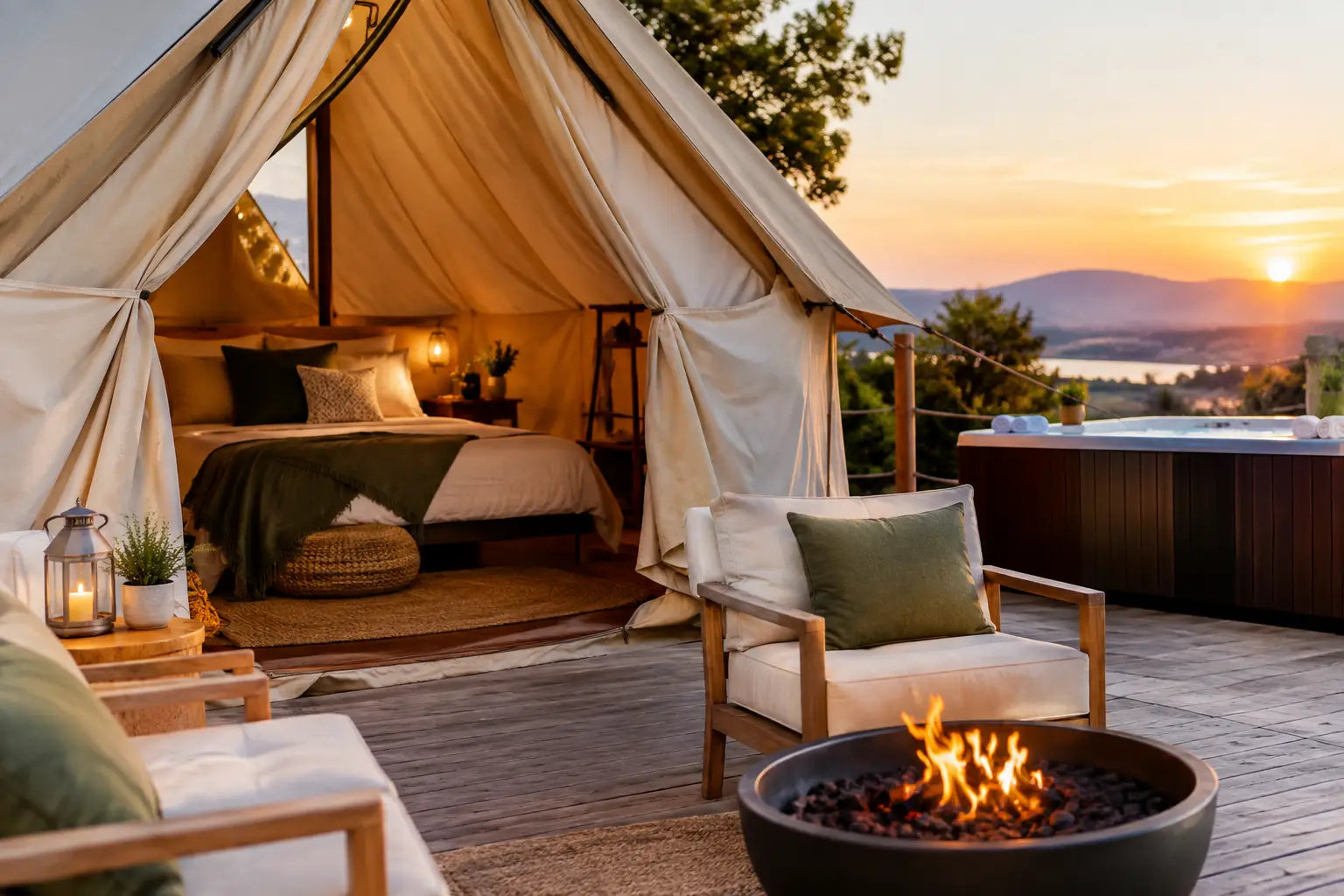
A glamping structure may catch the eye, but the amenities are what make guests exhale when they step inside. The most thoughtful glamping amenities do more than add comfort. They create a rhythm for slowing down: a warm shower after a trail walk, soft lighting at dusk, a deeply comfortable bed, and a place to sit quietly beneath the trees.
For a private backyard retreat, a vacation rental, or a hospitality property, the goal is not to fill every corner with features. It is to select a few beautiful, dependable elements that make time outdoors feel effortless, restorative, and worth returning to.
Start With the Feeling You Want Guests to Take Home
The strongest glamping spaces are designed around an experience rather than a checklist. A forest-side dome might center on warmth, stillness, and an evening sauna ritual. A desert retreat may call for shade, cooling, and long dinners under the stars. A backyard guest suite can feel like a private wellness escape, even when it sits only steps from the main home.
This first decision helps separate meaningful additions from expensive distractions. Ask what a guest should be able to do without leaving the space: sleep deeply, make morning coffee, shower comfortably, read in the afternoon, gather at night, or reset through heat and cold therapy. Each answer points to an amenity that supports the stay rather than competing for attention.
For many properties, comfort, privacy, and climate control deserve more investment than novelty. A beautiful outdoor tub has little value if guests cannot change nearby, hang their towels, or enjoy it in reasonable privacy. A fire feature is more inviting when there is dry seating, a windbreak, and enough light to move around safely after dark.
The Essential Glamping Amenities Begin With Sleep
A real mattress is one of the clearest differences between camping and glamping. Choose a supportive queen or king mattress when the footprint allows, then layer it with breathable sheets, a substantial duvet, and extra blankets for cool nights. Natural textures such as linen, cotton, wool, and wood bring warmth without making the room feel overly styled.
Sleep comfort also depends on what guests hear and feel. Blackout curtains or fitted window coverings can preserve privacy and soften early light. A quiet fan, portable heater, or mini-split system may be necessary depending on the climate and season. In humid areas, ventilation and moisture management matter as much as warmth. Condensation can quickly diminish an otherwise luxurious dome or tent.
Keep bedside function simple and generous: reading lights, a small shelf or table, easy-to-reach outlets, and a place for water. These details are modest, but they signal care. Guests should never have to place a phone on the floor or search the room for a charging port after a full day outside.
Create a Bathroom Experience That Feels Considered
Private bathing is often the amenity that moves a property from occasional-use glamping to a true overnight retreat. A nearby indoor bathroom offers the broadest appeal, while a dedicated bathhouse can become part of the experience when it is well designed. An outdoor shower can be memorable, especially in a secluded setting, but it should be paired with hot water, drainage, hooks, dry flooring, and a protected place to change.
If a full bathroom is not practical, be clear about what is available. A refined composting toilet can work well for off-grid sites, but guests still need a convenient handwashing station, mirror, towel storage, and reliable lighting. The best solution depends on local codes, site access, water supply, and the expectations of the people who will stay there.
Wellness Features Give the Stay a Ritual
Wellness amenities have a rare ability to make a glamping property feel personal rather than generic. A wood-fired or electric outdoor sauna invites guests to slow down at the end of the day. A cold plunge pool creates an energizing counterpoint, particularly when paired with a sauna and an outdoor rinse station. Together, they turn a simple overnight stay into a restorative ritual.
Placement matters. A sauna should have a natural path to a cool-down area, comfortable seating, towel storage, and access to water. A cold plunge requires a stable, level surface, a thoughtful drainage plan, and a realistic approach to water care. Both need privacy without feeling enclosed. The ideal setting frames trees, sky, stone, or a garden view, giving guests a reason to linger between sessions.
Not every site needs both features. In a compact backyard, a beautifully finished sauna may offer more value than trying to fit a full contrast-therapy zone. At a larger rental property, the pairing can be a defining draw. Consider your climate, guest profile, upkeep capacity, and the kind of stay you want to offer.
A dedicated yoga deck, meditation nook, or hammock grove can extend the wellness experience without adding much complexity. These spaces work best when they feel intentionally placed, not leftover. Morning sun, shade in the afternoon, and a sense of visual calm are often more valuable than elaborate equipment.
Make Outdoor Living Useful After Sunset
Glamping is not only about sleeping outdoors. It is about staying outdoors longer. A covered deck, small patio, or gravel terrace gives guests a place to enjoy coffee, meals, and quiet conversation without bringing the entire experience inside.
Provide seating that invites people to settle in. Two deep lounge chairs may be more effective than a large dining set no one uses. If meals are part of the stay, add a durable table, weather-resistant chairs, and enough surface space for serving. A compact outdoor kitchen can be lovely, but it should match the property’s operating needs. A simple coffee station, filtered water, mini refrigerator, and well-organized grilling area may be the better investment.
Lighting should feel warm and layered rather than bright. Use pathway lights for safe footing, a soft overhead fixture near the entry, and low ambient light around seating. Preserve dark skies when possible. Guests come to nature for the stars, not the glare of a floodlight.
A fire pit or fireplace can become the natural center of the evening, provided local fire restrictions allow it. Choose a setup that is easy to operate, place it well away from structures and vegetation, and make the surrounding seating comfortable. The fire is only part of the amenity. The real luxury is having a place where people can sit without rushing back indoors.
Plan the Invisible Comforts Before the Decorative Ones
The most successful glamping amenities rely on practical systems that guests may barely notice. Reliable power, Wi-Fi where appropriate, water pressure, drainage, heating and cooling, pest control, and secure locks all shape how a space feels. When these basics fail, no amount of beautiful furniture can recover the experience.
Plan utility needs early, especially if you are adding a sauna, plunge pool, bathhouse, or climate-controlled dome. Electrical capacity, site grading, septic or sewer access, and local permits can influence both cost and placement. For remote properties, solar power and off-grid water systems can be compelling, though they require honest expectations around weather, maintenance, and guest use.
Storage also deserves attention. A concealed bench, outdoor cabinet, or small service closet keeps extra linens, cleaning supplies, firewood, and wellness accessories close at hand while preserving the visual calm of the guest area.
Design for Your Guests, Not an Imagined Audience
A personal retreat can be wonderfully minimal: exceptional bedding, an outdoor shower, a sauna, and a quiet place to sit may be all that is needed. A rental property often benefits from clearer instructions, more durable finishes, luggage space, and amenities that work well for first-time guests. Families may value a safe play area and flexible sleeping arrangements, while couples may prioritize privacy and spa-like details.
At Tanari Earth, we see outdoor wellness as a setting for better rituals, not a collection of isolated products. The most memorable spaces feel composed: the path leads somewhere inviting, the materials belong to the landscape, and every feature makes it easier to spend more time relaxing in nature.
Choose amenities with that feeling in mind. A few well-made elements, thoughtfully placed and easy to use, can turn a beautiful structure into the place guests remember long after they have gone home.

