
Cart
0
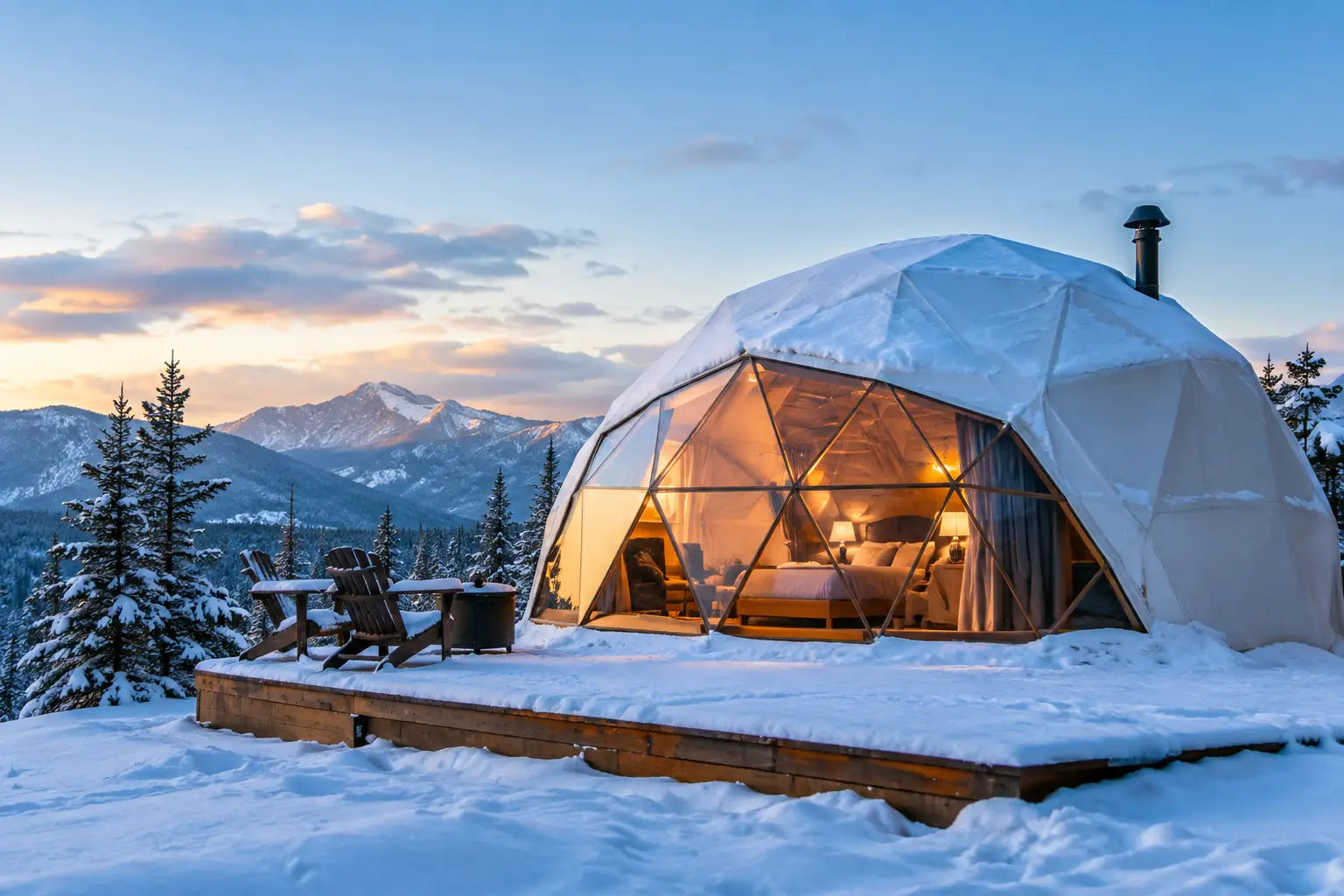
A snowfall outside a panoramic window can turn an ordinary overnight stay into something memorable. But are glamping domes good in winter? They can be exceptionally inviting, provided the structure, site, and heating plan are designed for the climate rather than treated as an afterthought.
A dome is not automatically a four-season retreat just because it looks enclosed. Its comfort in cold weather depends on the quality of its cover, insulation, ventilation, floor system, heating source, and the wind and snow conditions on your property. Get those details right, and winter becomes one of the most rewarding seasons to spend more time relaxing in nature.
Why winter suits the glamping dome experience
Winter brings a sense of contrast that is especially powerful in a thoughtfully prepared outdoor space. Inside, soft light, warm textiles, and steady heat create a calm refuge. Outside, rain, frost, bare branches, or falling snow make the landscape feel closer and quieter.
For a homeowner, a winter-ready dome can become a reading room, meditation space, guest suite, or private place to warm up after a sauna and cold plunge ritual. For vacation-rental hosts and hospitality properties, it extends the usable season and gives guests a reason to book beyond summer weekends. The experience is less about roughing it and more about feeling sheltered while remaining connected to the elements.
The curved form of a geodesic dome can also be an advantage. Its geometry distributes loads efficiently, and a properly engineered dome sheds wind differently than many conventional tent shapes. Still, performance varies widely by model. A structure selected for mild California winters is not necessarily suitable for a snowy mountain climate or an exposed northern property.
Are glamping domes good in winter in your climate?
The most honest answer is: it depends on the climate and the specification. A well-equipped dome can be warm in freezing weather, but a basic seasonal tent with a portable heater may feel drafty, damp, and difficult to maintain once temperatures fall.
Before choosing a dome, look beyond a general "all-season" claim. Ask for clear information about the fabric or shell, insulation options, frame strength, recommended snow load, wind rating, window construction, and cold-weather operating guidance. If your property experiences heavy snow, sustained high winds, ice, or deep freezes, those conditions should determine the model and site plan from the beginning.
Cold, dry climates
In a dry, cold region, holding heat is the priority. Insulated liners, a raised insulated floor, a dependable heat source, and sealed openings make the greatest difference. Condensation can still occur when warm interior air meets a cold exterior surface, especially overnight, so controlled ventilation remains essential.
Wet winter climates
In rainy coastal and temperate areas, moisture management matters as much as warmth. A dome should sit above wet ground on a stable base, with drainage designed to move water away from the perimeter. A waterproof outer cover is only part of the solution. Airflow, a vapor-aware floor assembly, and regular drying practices help keep the interior fresh.
Snowy and windy sites
For alpine, northern, or exposed locations, engineering is non-negotiable. Choose a dome rated for the anticipated snow and wind loads, anchor it to an appropriate foundation, and maintain access around the structure so snow can be monitored and managed. Never assume a striking visual design is rated for the demands of your specific site.
The details that make a dome feel warm
A warm winter dome is a system. Heating alone cannot compensate for heat escaping through an uninsulated floor, thin windows, or poorly sealed entry points.
Start from the ground up. A raised platform creates separation from cold, wet soil and allows you to build a more comfortable floor. Insulation beneath the finished flooring reduces the chill that radiates upward, while rugs add an immediate sense of warmth underfoot. A solid platform also protects the dome from uneven settling and helps manage runoff around the site.
The cover and liner matter next. Some domes use insulated fabric systems, while others offer thermal liners that create an additional air layer. Clear windows are often the most magical feature of a dome, but they are also the area most likely to lose heat. Consider their size and placement in relation to prevailing wind, winter sun, and the view you most want to preserve.
Doors deserve more attention than they usually receive. A rigid, well-sealed entry reduces drafts and supports everyday usability. In colder locations, a small vestibule or protected entry zone can keep cold air from rushing into the main space whenever someone steps outside.
Heating safely and comfortably
Electric heat is often the simplest choice for a finished backyard retreat or a hospitality setting with reliable service. A professionally installed electric heater or mini-split can offer consistent, controllable warmth without introducing combustion into the dome. A mini-split may also provide cooling and dehumidification during warmer months, making it a strong option for a true four-season space.
Wood stoves create a beautiful, elemental atmosphere, but they require more planning. The stove, heat shield, hearth, chimney components, roof penetration, clearances, and ventilation must be compatible with the dome manufacturer’s specifications and local code. Installation should be handled by qualified professionals. Carbon monoxide and smoke alarms are essential, and fire extinguishers should be easy to reach.
Portable propane heaters can be useful in limited circumstances, but they are not a casual solution for an enclosed sleeping space. They produce moisture, require adequate ventilation, and carry carbon monoxide and fire risks. Follow all manufacturer instructions and local regulations, and never leave an unvented heater operating while occupants are asleep.
Whatever heat source you choose, size it for the dome’s volume, insulation level, and climate. An oversized heater can make the air uncomfortably dry or hot near the unit. An undersized one may run continuously without ever creating real comfort. A thermostat, remote temperature sensor, and carbon monoxide monitoring turn a charming winter retreat into a more dependable one.
Ventilation is part of winter comfort
It may seem counterintuitive to ventilate a dome when it is cold outside. Yet a fully sealed space can trap humidity from breathing, cooking, wet clothing, and heating sources. That moisture condenses on cold surfaces, leading to fogged windows, damp bedding, and eventually mildew.
The goal is not a constant draft. It is controlled air exchange. A roof vent, operable window, or small exhaust fan can release humid air while the heating system maintains a comfortable temperature. In particularly damp climates, a compact dehumidifier may be worthwhile, especially for domes used as guest accommodations.
Keep bedding and furniture a few inches away from exterior walls where possible. Choose washable throws, breathable layers, and materials that dry easily after a wet weekend. A small boot tray by the door protects the interior from snow and mud while making arrivals feel intentional rather than improvised.
Site planning matters as much as the dome
A beautiful structure can underperform if it is placed in the wrong spot. Look for a location with good drainage, practical access, and some natural protection from prevailing winds. Winter sun can be valuable, so consider how the dome will receive light in the shortest days of the year, not just in summer.
A clear path from the house or parking area changes the experience in bad weather. Guests should be able to reach the dome without crossing slippery ground or carrying luggage through standing water. Thoughtful lighting, non-slip surfaces, and a covered transition area make a meaningful difference, particularly for a rental property.
Local permitting, zoning, electrical work, sanitation, and occupancy rules may apply, especially if the dome is used as a sleeping space or offered to paying guests. Check requirements before committing to a foundation, utility plan, or booking calendar. Premium outdoor living should feel effortless, but the best results are supported by careful planning behind the scenes.
A winter checklist before the first cold night
Before the season settles in, inspect the cover for wear, confirm anchors and frame connections are secure, clear drainage routes, and test heating and safety devices. Wash and fully dry textiles, keep a snow-removal plan if applicable, and make sure emergency access remains open.
For hospitality use, add a simple guest guide that explains the heater, ventilation, door operation, quiet hours, and what to do if weather changes. Clear instructions protect the structure and help guests settle into the experience with confidence.
At Tanari Earth, we see outdoor spaces as an invitation to create rituals that slow the pace of daily life. A winter dome can be the place where steam rises from a nearby sauna, tea warms your hands, and the changing weather becomes part of the evening rather than a reason to stay indoors.
The right dome does not erase winter. It lets you meet it in comfort, with warm floors, clear views, and a retreat waiting just beyond your door.

