
Cart
0
A well-designed ADU changes the feeling of a property long before anyone steps inside. It creates a destination just beyond the main home: a quiet place for guests to arrive, a focused studio for work, or a personal setting for rest. The most compelling ADU design trends reflect that shift. Homeowners are moving beyond the idea of a spare backyard unit and creating small, deeply considered retreats connected to nature.
For a primary residence, an ADU can make daily life feel more spacious without requiring a larger main house. For a vacation rental or hospitality property, it can become the detail guests remember most. The difference lies in designing for an experience, not simply fitting rooms into a footprint.
ADU Design Trends Center on Experience
The strongest design direction is intentionality. Rather than trying to reproduce every feature of a full-size house, many owners are deciding what the structure should do best. A compact guest suite may prioritize a beautiful sleeping area, a private patio, and a thoughtful bath. A backyard studio may favor clear sightlines, built-in storage, and a flexible open floor plan.
This approach produces a more composed result. Every square foot has a purpose, but the space never feels overworked. A small ADU is especially successful when it has a clear identity: a garden guesthouse, a wellness studio, a creative workspace, or a serene rental suite.
That identity should guide early decisions about layout, materials, and the surrounding landscape. A structure intended for quiet weekend stays needs different details than one designed for a multigenerational household. Both can be beautiful, but neither benefits from a one-size-fits-all plan.
Indoor-outdoor living as a foundation
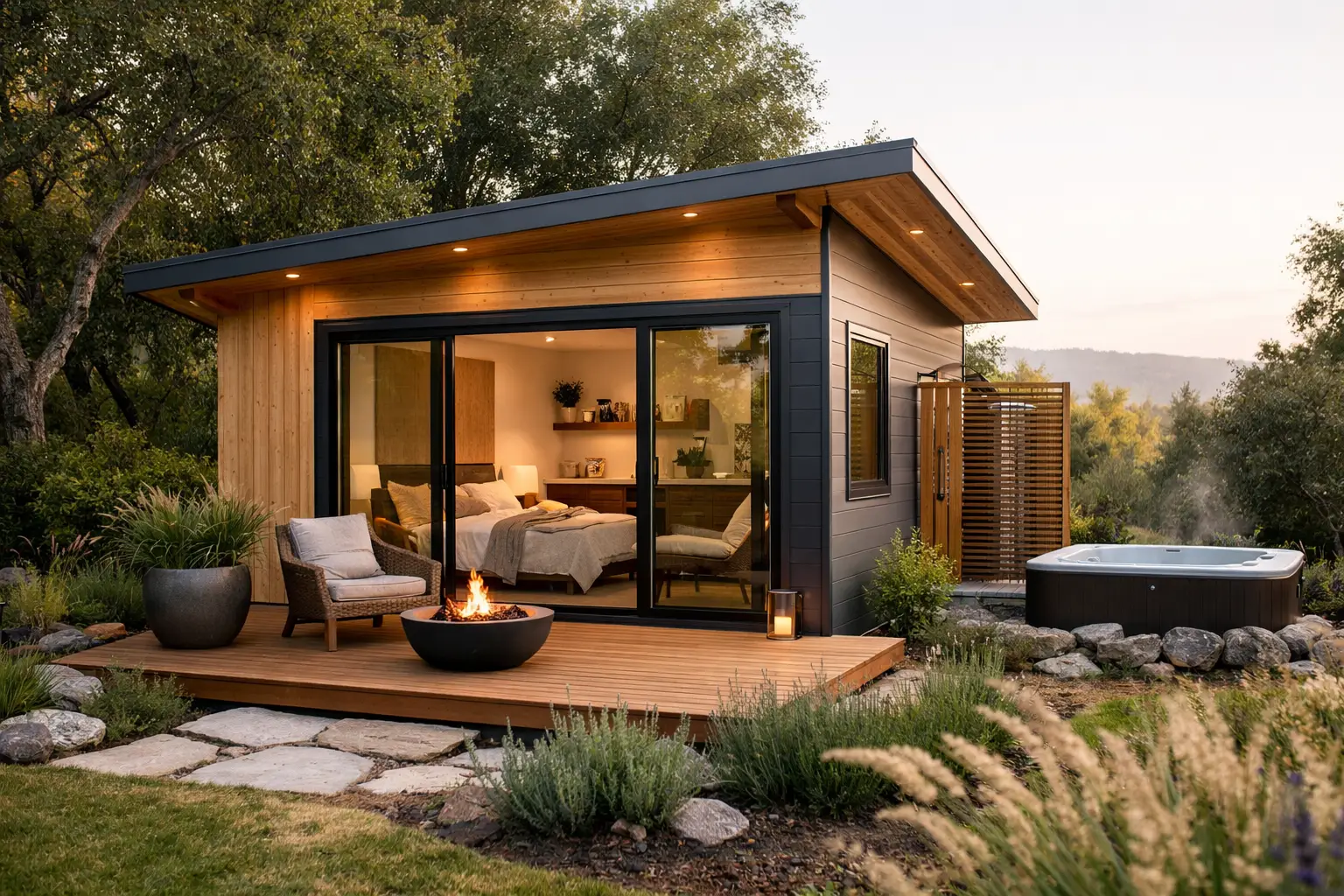
Large windows and glass doors remain central to ADU design, particularly when a property has mature trees, a garden, or a considered view. The goal is not glass for its own sake. It is to let daylight, weather, and the changing seasons become part of the experience of the room.
A pair of doors opening onto a deck can make a modest living space feel remarkably generous. Clerestory windows preserve privacy while drawing in light. A covered porch or small pergola gives occupants a place to sit outside even when the afternoon sun is strong or a light rain moves through.
Orientation matters as much as window size. In many climates, west-facing glass can create excessive heat and glare. Deep roof overhangs, exterior shades, trees, and carefully placed openings can protect comfort while keeping the connection to the outdoors intact. A design that looks striking in a rendering should also be pleasant at 4 p.m. in August.
Natural Materials With Lasting Presence
Warm, tactile materials are replacing interiors that feel overly polished or generic. Wood ceilings, oak cabinetry, limewash-inspired walls, natural stone, handmade tile, and textured plaster all bring visual depth to a compact structure. These materials are especially effective in an ADU because they make a small number of surfaces feel meaningful.
The luxury is in restraint. Choose one or two materials with character and allow them room to breathe. For example, a pale wood ceiling paired with mineral-toned walls and simple stone flooring can feel far more elevated than a room filled with competing finishes.
Outside, the same principle applies. Durable wood cladding, dark metal roofing, muted earth-toned siding, and stone pathways help an ADU settle into its setting. The best exterior palette is often one that complements the main home without copying it exactly.
There are practical trade-offs. Natural wood requires periodic care, especially in sunny, wet, or coastal locations. Stone may add cost and structural weight. High-quality porcelain can offer the visual calm of natural materials with lower maintenance in a busy rental. The right choice depends on how the ADU will be used and how much upkeep the owner wants to take on.
Wellness Rooms Become Everyday Ritual Spaces
One of the most distinctive ADU trends is the rise of dedicated wellness space. Instead of treating wellness as an occasional outing, homeowners are creating settings for it near home: a calm changing area beside an outdoor sauna, a private room for yoga and meditation, or a compact recovery suite with a shower and lounge seating.
An ADU can support these rituals without becoming overly specialized. A studio with a sink, concealed storage, a full bath, and generous doors to a private terrace can serve as a movement room this year and a guest space later. Flexibility protects the long-term value of the investment.
For properties centered on outdoor wellness, the transition between spaces deserves particular attention. Consider a sheltered path from sauna to cold plunge, hooks for robes and towels, non-slip surfaces, soft exterior lighting, and a nearby place to rest. These details create ease, which is often the real definition of luxury.
A wellness-focused ADU also benefits from acoustic planning. Insulation, solid interior doors, and thoughtfully placed mechanical equipment keep the space peaceful. If the unit sits near a road, neighboring property, or active household, this can matter more than a decorative upgrade.
Flexible Layouts Without a Compromised Feel
Flexibility is often misunderstood as empty space. In a refined ADU, it means the room can adapt while still feeling complete. Built-in benches with storage, wall beds that disappear into cabinetry, fold-down desks, and dining tables that double as work surfaces can all extend what a small footprint can do.
The key is to avoid filling every wall with mechanisms. Leave enough open area for the space to feel restful. A guest should not need instructions to make coffee, unpack a suitcase, or find a comfortable place to sit.
Separate zones can also create a sense of privacy without adding walls. A partial-height cabinet, a change in ceiling finish, or a well-placed sofa can distinguish sleeping, working, and lounging areas. This is useful for rental ADUs, where guests often appreciate a sense of order even in a compact plan.
Kitchens that feel considered, not oversized
Kitchenettes are becoming more sophisticated, with integrated refrigerators, quiet dishwashers, induction cooktops, and cabinetry that conceals everyday clutter. Yet bigger is not always better. In a unit designed primarily for short stays, a handsome beverage station, under-counter refrigerator, microwave, and generous counter space may be more useful than a full kitchen.
For long-term guests or family living, a complete kitchen is usually worth the space. Plan for storage first. Deep drawers, a pantry cabinet, and a designated home for recycling can make a compact kitchen feel easier to use than a larger but poorly organized one.
Privacy Is a Design Feature
As ADUs become more common, privacy has become one of the most valuable aspects of good design. It is shaped by more than fences. Entry paths, window placement, exterior lighting, landscaping, and sightlines from the main house all affect how independent the space feels.
A separate gate, a small planted courtyard, or an entry that faces away from the primary home can make guests feel welcome without making them feel watched. Layered planting softens boundaries while preserving daylight. Native grasses, evergreen shrubs, aromatic herbs, and specimen trees can turn a necessary privacy buffer into a garden experience.
For short-term rental or glamping-adjacent properties, outdoor space can carry as much value as the interior. A private deck with two lounge chairs, a fire feature where permitted, and a view framed by planting often creates a stronger impression than adding more indoor square footage.
Build for Comfort, Efficiency, and Approval
Beautiful ADU design needs a practical foundation. Local zoning, setbacks, utility connections, fire requirements, occupancy rules, and permit timelines vary substantially by jurisdiction. Begin those conversations early, before becoming attached to a layout that may need major revisions.
Comfort systems deserve the same care as visible finishes. Efficient heating and cooling, adequate ventilation, well-insulated walls, quality windows, and water-conscious fixtures create a quieter, more reliable space. They also matter to guests, who may not mention a great heat pump but will absolutely notice a noisy one.
Think ahead about access for construction, deliveries, and future maintenance. A remote site or narrow side yard may affect what can be prefabricated, how utilities are routed, and the overall budget. Clear planning at this stage protects the serenity of the final result.
The most enduring ADUs feel personal rather than trendy. Start with the moments you want the space to hold: a slow morning with garden views, a restorative sauna ritual, a comfortable visit from family, or a private stay that allows guests to exhale. When the design supports those moments with natural materials, thoughtful privacy, and room to breathe, a backyard structure becomes part of the life you want to live outside.
