
Cart
0
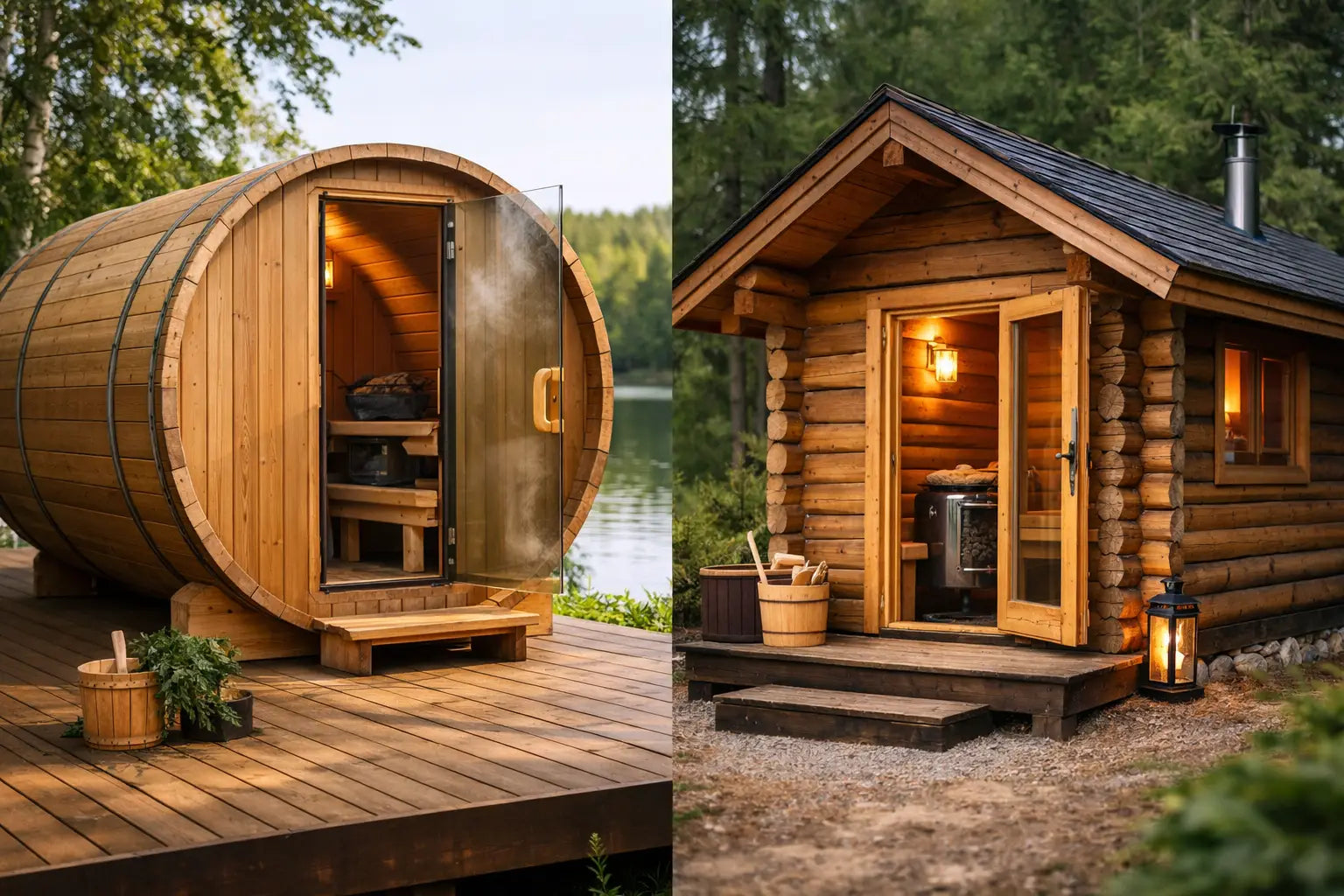
Some sauna decisions are really design decisions in disguise. When you compare a barrel sauna vs cabin sauna, you are not only choosing how you want heat to feel - you are choosing how your outdoor retreat will look, flow, and support your daily ritual.
For some properties, a barrel sauna feels sculptural and effortless, tucked into the landscape like a warm cedar cocoon. For others, a cabin sauna brings a more architectural presence, with roomier interiors and a stronger sense of indoor-outdoor living. The better option depends on your space, your aesthetic, and how you want to use it over time.
Barrel sauna vs cabin sauna at a glance
A barrel sauna is rounded, compact, and often quicker to heat. Its curved shape reduces unused air space, which can create an efficient, enveloping heat experience. Visually, it tends to feel organic and relaxed, making it a natural fit for wooded settings, garden retreats, and hospitality spaces that want a memorable focal point.
A cabin sauna has straight walls and a more traditional room-like structure. That shape gives you more usable interior space, more bench layout flexibility, and often a stronger sense of comfort for longer sessions or shared use. If your goal is to build a polished wellness zone with a more architectural look, a cabin sauna usually gives you more freedom.
Neither style is universally better. One is simply better for the way you live.
How the heat feels
Heat experience is often the first practical difference people notice. A barrel sauna typically heats quickly because there is less excess air inside the structure. That can be appealing if you want a session that feels spontaneous - step outside, let it warm, and settle in without much wait.
The curved walls also shape the atmosphere. Many people describe barrel saunas as feeling cozy and cocooning. The heat can feel more immediate, especially in a smaller unit. For solo use or couples, that intimacy is part of the appeal.
A cabin sauna usually takes a bit more energy and time to heat, especially if it has a larger footprint. In return, it often provides a more spacious and even experience once it reaches temperature. With proper bench placement and a well-sized heater, a cabin sauna can feel calmer and less compressed, particularly for longer sessions.
If you love compact efficiency, the barrel style has a clear advantage. If you care more about spacious comfort and room to stretch out, the cabin style often wins.
Design and visual impact
For design-conscious homeowners, this is where the choice becomes personal.
A barrel sauna has instant character. Its silhouette stands out without feeling loud, and the rounded profile softens the look of an outdoor space. On a wooded property, beside a cold plunge, or near a glamping setup, it can feel warm, inviting, and quietly distinctive. It is often the choice for people who want the sauna to feel like an experience the moment you see it.
A cabin sauna reads differently. It feels more integrated with built environments and pairs beautifully with patios, decks, ADUs, studio spaces, and modern landscape plans. It can feel more substantial and more custom, especially when you want your sauna to echo the lines of a home or outdoor structure.
In simple terms, barrel saunas tend to feel more sculptural. Cabin saunas tend to feel more architectural.
Interior space and comfort
The shape of a sauna affects more than appearance. It changes how you move inside it.
Barrel saunas are efficient, but the curved walls can reduce shoulder room and limit how benches are positioned. Depending on the size, some users find them perfectly comfortable, while others feel the shape is better suited to shorter sessions or fewer people. If your priority is a personal ritual, this may not matter much. If you expect to host friends or give guests a more spacious experience, it might.
Cabin saunas usually offer more usable square footage because of their straight walls and higher, flatter interior lines. That makes them easier to configure with different bench levels, wider seating, or more comfortable group layouts. The result can feel less like entering a pod and more like stepping into a dedicated wellness room.
This matters if your sauna is part of a bigger ritual. If you picture a slow evening moving between the sauna, a cold plunge, and a quiet outdoor lounge, cabin designs often support that sense of ease more naturally.
Installation and placement
Outdoor placement is one of the most practical parts of the barrel sauna vs cabin sauna decision.
Barrel saunas are often simpler to place because they are compact and self-contained. For many homeowners, that makes them appealing for tighter footprints or areas where they want a strong wellness feature without a full structural presence. They can sit beautifully at the edge of a deck, in a garden clearing, or near a pool zone where space is limited but impact still matters.
Cabin saunas need a bit more planning. Their larger footprint and more structured form can require more consideration around foundation, access, and spacing. That extra planning can be worthwhile if you are creating a full outdoor wellness environment rather than adding a single feature.
If your property has a clear designated area for a sauna retreat, a cabin model can feel intentional and grounded. If your space is narrower, more naturalistic, or more flexible, a barrel sauna may fit more gracefully.
Weather performance and maintenance
Both styles can perform beautifully outdoors when they are built well and maintained properly. The difference is less about whether one works outside and more about how each structure manages exposure over time.
Barrel saunas are often praised for shedding rain and snow effectively because of their curved exterior. Water does not sit on a flat roof, which can be an advantage in certain climates. Their smaller volume can also make them easier to keep warm in cooler weather.
Cabin saunas vary more depending on roof design, insulation approach, and construction details. A well-made cabin sauna can be excellent in four-season conditions, but quality matters. Because the structure is more room-like, buyers should pay close attention to materials, weather sealing, and how the unit is designed for outdoor use.
Maintenance for either style comes down to wood care, ventilation, heater quality, and site conditions. If your sauna will live under trees, near salt air, or in a very wet climate, those factors matter just as much as the shape.
Cost and long-term value
Price differences vary by size, materials, and heater type, but barrel saunas are often more accessible at the entry level. Their efficient form and simpler footprint can make them a strong choice for buyers who want premium outdoor wellness without committing to a larger buildout.
Cabin saunas often cost more, especially as finishes, dimensions, and customization increase. But they can also deliver more in terms of comfort, design flexibility, and perceived permanence. On a high-end residential property or hospitality site, that added presence may feel worth the investment.
Long-term value is not just about the purchase price. It is about whether the sauna supports the lifestyle you actually want. A less expensive sauna that feels cramped or visually out of place can end up being the wrong value. A more substantial model that anchors your outdoor retreat and gets used year-round may earn its place quickly.
Which sauna is right for your space?
Choose a barrel sauna if you want a compact footprint, efficient heat-up time, and a design that feels organic in the landscape. It is especially appealing for smaller properties, intimate rituals, and outdoor spaces where charm and simplicity matter as much as performance.
Choose a cabin sauna if you want more interior room, more design flexibility, and a look that feels integrated with a refined outdoor living plan. It is often the stronger fit for larger properties, shared use, vacation rentals, and homeowners creating a layered wellness environment.
At Tanari Earth, the best sauna choice is never just about specs on a page. It is about how the structure supports restoration, how it sits in the landscape, and how naturally it becomes part of your routine.
The right sauna should feel like it belongs there - not only on your property, but in the rhythm of your life.

