
Cart
0
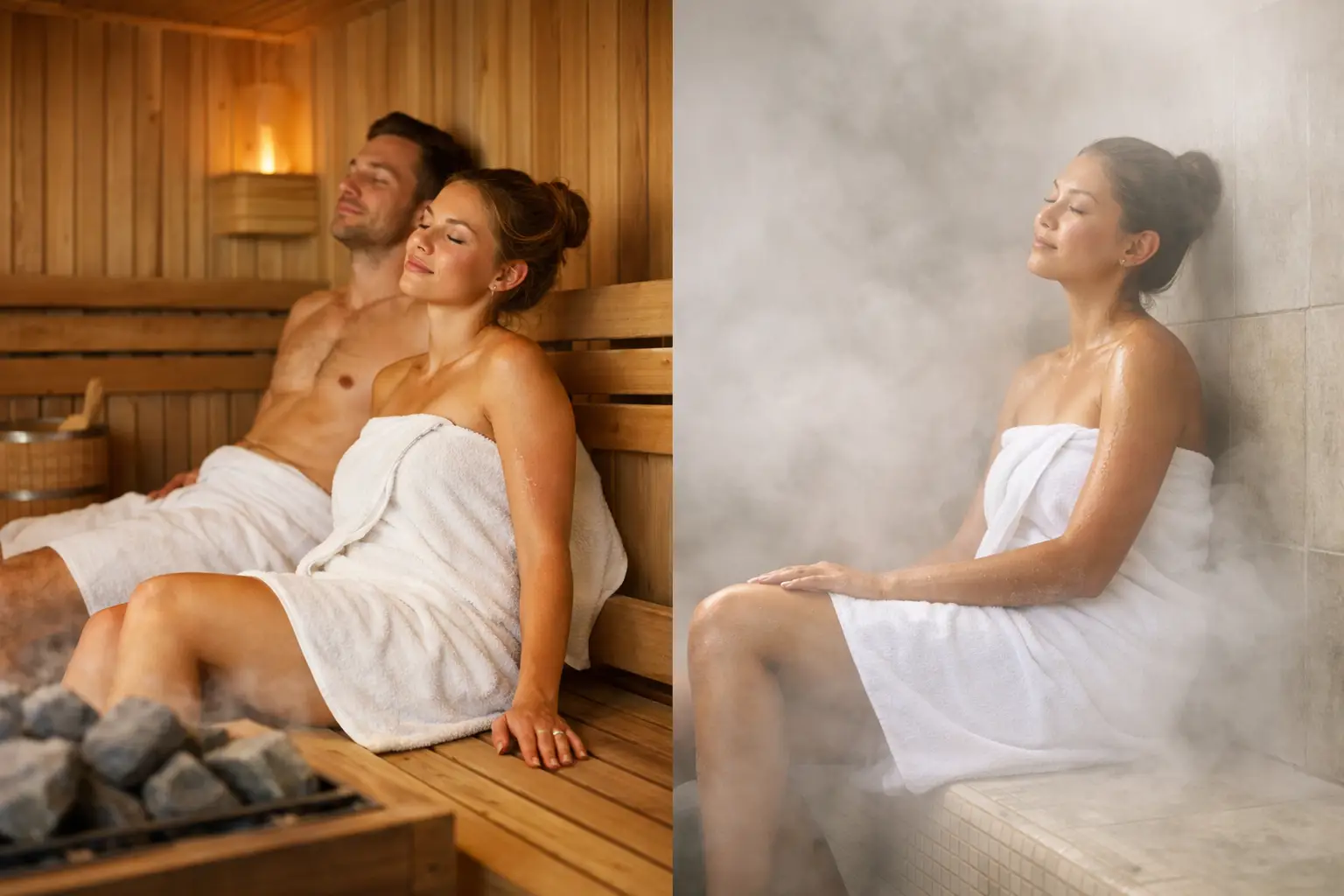
The feeling you want after a long day matters more than the label on the door. In the sauna versus steam room decision, one experience invites you into dry, wood-scented heat with a view of the trees; the other surrounds you in warm, misty air that softens the edges of the day. Both can become meaningful parts of a home wellness ritual, but they ask different things of your space, design vision, and routine.
For an outdoor oasis, the best choice is usually the one that feels natural to use often. Consider the climate around your home, the materials you love, whether you want a cold plunge nearby, and how you hope guests will remember the experience.
Sauna Versus Steam Room: The Core Difference
A sauna produces high heat with low humidity. Traditional models use a heater and sauna stones, often in a cedar-lined room, while infrared saunas use radiant panels to warm the body more directly at lower air temperatures. A traditional sauna commonly operates around 150 to 195 degrees Fahrenheit, though personal preferences and manufacturer guidance should always lead the way. Pouring a small amount of water over heated stones creates a brief wave of steam, but the room remains fundamentally dry.
A steam room works differently. A steam generator fills a sealed enclosure with nearly 100 percent humidity, generally at a lower temperature, often around 110 to 120 degrees Fahrenheit. The air feels dense and enveloping. Rather than the dry warmth and open-grain beauty of a sauna, steam offers a cloudlike environment with moisture beading across tile, stone, or glass.
The distinction affects more than comfort. Dry heat and humid heat require different construction details, different maintenance habits, and different visual languages. Neither is universally better. The right answer depends on the atmosphere you want to create.
Why an Outdoor Sauna Often Feels at Home in Nature
A sauna has a particular affinity for the outdoors. Step from crisp morning air into the warmth of natural wood, sit quietly as daylight shifts through a window, then cool down beneath the sky. The ritual has a beginning, a pause, and a return to the landscape.
For homeowners and hospitality hosts, that rhythm creates an experience rather than simply another amenity. A well-sited outdoor sauna can become the anchor of a restorative zone with a cold plunge, lounge chairs, soft lighting, and a sheltered path back to the house or guest suite. It can be designed to feel beautifully intentional even when it is not in use.
Wood is also a practical part of the sauna experience. Properly selected sauna woods stay comfortable to the touch and bring warmth, texture, and a quiet sense of craft to the space. Large windows can frame a garden, forest edge, desert horizon, or water view. In a vacation rental, that visual moment can be as memorable as the heat itself.
Steam rooms can be placed outdoors, but they are usually more complex. Because steam must be contained, the enclosure needs a vapor-tight assembly, reliable drainage, carefully detailed waterproofing, and finishes that tolerate constant moisture. This can be an excellent choice for a custom spa pavilion or an indoor-outdoor bathhouse, but it rarely offers the same straightforward connection to a breezy outdoor setting.
The Case for Steam
Steam is not a lesser option. For some people, humid warmth feels more comfortable than the intensity of a hot, dry sauna. It can be especially appealing after a workout, during a quiet evening shower ritual, or in a spa-like suite where tile, stone, and warm lighting set the tone.
A steam room may be the better fit if your project already includes a luxury bathroom renovation, if you prefer lower operating temperatures, or if the mood you want is intimate and cocooning. It can also make sense in dense urban properties where a carefully enclosed interior wellness room is more feasible than a freestanding outdoor structure.
The trade-off is that a steam room is less forgiving of shortcuts. Moisture management is central to its performance and longevity. Professional planning around ventilation, waterproofing, electrical work, plumbing, and generator access is essential.
Heat, Comfort, and Your Personal Ritual
The bodily experience is where preferences become clear. Sauna heat tends to feel clean, expansive, and energizing. The air may be very hot, but the low humidity allows perspiration to evaporate more easily. Many people enjoy alternating sauna sessions with cool air, a cool shower, or a cold plunge, followed by rest and hydration.
Steam heat feels gentler in temperature but more intense in saturation. Some people find the humidity soothing, while others feel crowded by it after a few minutes. If you are sensitive to dry air, steam may be more appealing. If you dislike dampness or want to savor an open view while you relax, a sauna is often the more natural choice.
Neither setting needs to become an endurance test. Short sessions, water nearby, and a gradual approach create a more enjoyable ritual than pushing through discomfort. People with cardiovascular conditions, low blood pressure, pregnancy, respiratory concerns, or other health considerations should consult a qualified clinician before using high-heat environments. Avoid alcohol before and during use, and leave immediately if you feel dizzy, nauseated, weak, or unwell.
Design and Installation Considerations
A sauna is typically the simpler path for an outdoor wellness project, though site preparation still matters. You will need a stable, level base; appropriate electrical service for the heater; safe clearances; and a location that supports privacy without cutting you off from the landscape. Consider the walk from your home in every season. A gravel path may feel charming in summer but less inviting in rain or snow without thoughtful lighting and drainage.
Ventilation matters in a sauna as well, but its purpose is to keep fresh air moving and help the structure dry between sessions. With regular care, an outdoor sauna can age gracefully as part of a well-designed garden, pool area, or guest retreat.
Steam rooms demand a more controlled envelope. Walls, ceiling, benches, and seams must be built to resist vapor migration. The ceiling is commonly sloped so condensed water does not drip on occupants. A dedicated steam generator, water supply, drain plan, and service access all need to be considered before finishes are selected. Those requirements can raise the project budget, particularly when retrofitting an existing space.
For property owners comparing long-term value, think beyond initial installation. A sauna often brings strong visual presence with a relatively clear operational routine: heat, cool down, air out, repeat. A steam room can feel exquisitely luxurious, but it requires more specialized construction and ongoing attention to keep moisture from becoming a maintenance issue.
Choosing for a Home, Guest Stay, or Hospitality Property
At home, choose the ritual you can imagine protecting on an ordinary Tuesday. If you picture slipping outside at dusk, warming up in a cedar-lined room, and sitting afterward under a blanket with tea, an outdoor sauna is likely the stronger fit. If you picture a private, tiled sanctuary connected to your bath suite, steam may better match your habits.
For vacation rentals and glamping properties, an outdoor sauna usually has an advantage because it photographs beautifully, introduces guests to the setting, and gives them a simple, intuitive wellness experience. A cold plunge beside it can add contrast and encourage a longer, more memorable stay. Clear operating instructions, timed sessions, and regular cleaning are especially important in shared-use environments.
For a larger estate or boutique hospitality concept, there is room for both. A sauna pavilion can offer a social, nature-centered ritual, while a steam room near treatment rooms or luxury suites provides a more private spa experience. The key is not to duplicate amenities for their own sake. Each element should earn its place in the guest journey.
The Better Choice Is the One You Will Use
Choose a sauna when you want natural materials, an outdoor focal point, dry heat, and an easy pairing with cool air or cold water. Choose a steam room when you love humid warmth and are ready to invest in a fully sealed, moisture-conscious spa enclosure.
The most compelling wellness spaces are not defined by the hottest room or the longest feature list. They are shaped around a repeatable pause: a few unhurried minutes of warmth, a breath of fresh air, and the feeling that home has made more room for restoration.

