
Cart
0
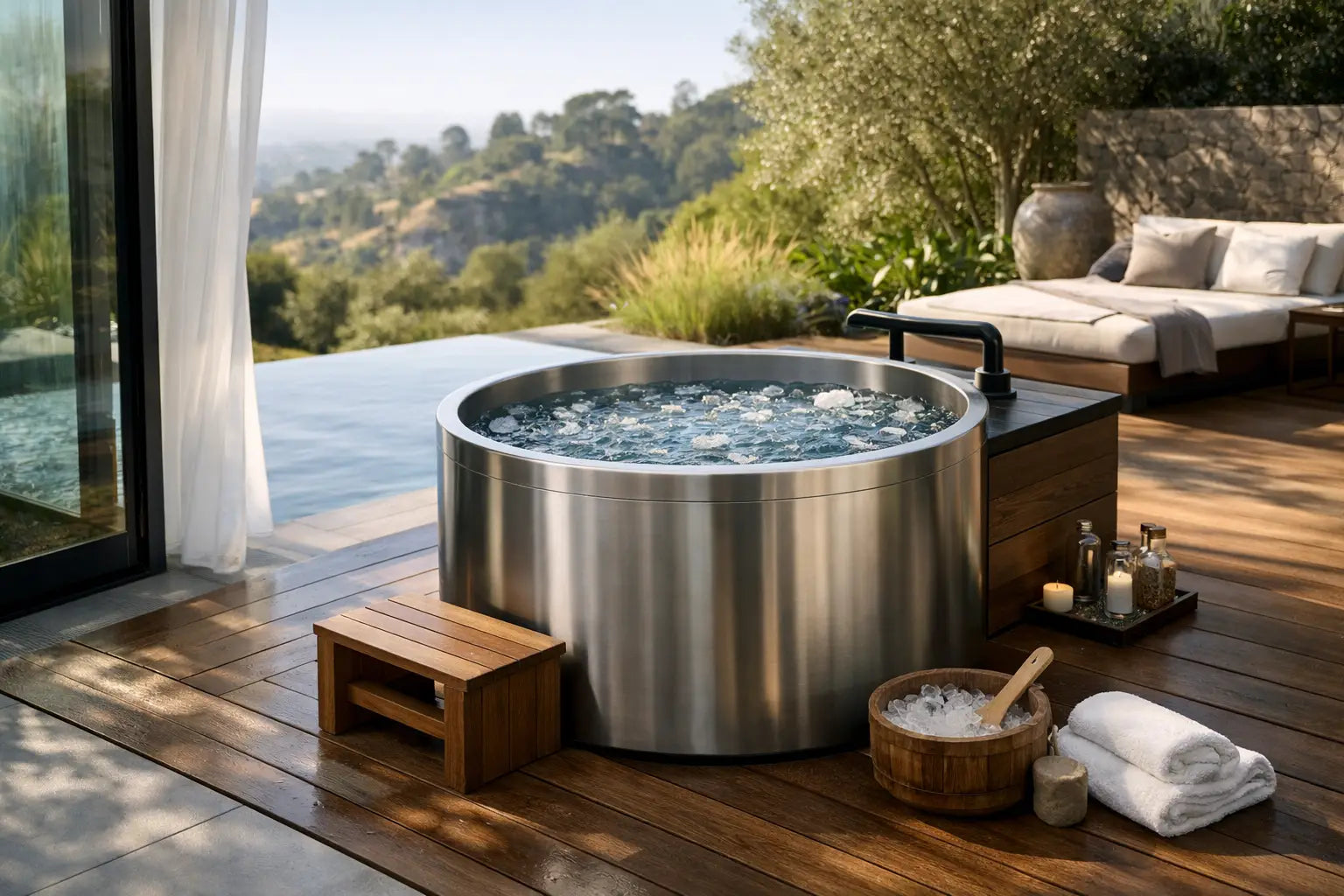
A cold plunge should never feel like an appliance dropped into the corner of a patio. The most compelling luxury cold plunge tubs create a pause in the day: steam lifting from a nearby sauna, bare feet on warm stone, a quiet view of trees or open sky, and a few intentional minutes devoted entirely to yourself.
For a private residence, a guest property, or a hospitality setting, the difference between a basic cold bath and an elevated wellness ritual is rarely one feature alone. It is the way the tub performs, how it sits within the landscape, the quality of its materials, and the ease with which it invites you back tomorrow.
What Defines Luxury Cold Plunge Tubs?
Luxury is not simply a matter of a higher price point or a polished exterior. A well-considered cold plunge balances dependable temperature control with tactile materials, thoughtful proportions, and a visual presence that belongs in the setting.
A refined model should feel substantial when you step in and simple when you care for it. That usually means a properly insulated vessel, a cooling system sized for the climate and water volume, filtration that supports regular use, and controls that do not require constant adjustment. The most beautiful finish loses its appeal quickly if the water is difficult to maintain or the system struggles through a hot California afternoon.
Design matters just as much. Natural wood cladding, powder-coated metal, stone-look finishes, and clean architectural forms can all work beautifully. The right choice depends on the larger property. A cedar sauna and wooded garden may call for warm timber tones, while a modern pool terrace can suit a low-profile tub in matte black or soft mineral gray.
The goal is not to make the plunge the loudest object outdoors. It is to make it feel like a natural part of the retreat.
Start With the Ritual, Not the Specification Sheet
Before comparing chillers, decide how the space will be used. A homeowner who wants a quiet morning reset has different needs than a vacation-rental host planning for multiple guests after a day of hiking. A plunge beside a sauna is used differently from one placed near a pool or fitness studio.
Consider the full sequence. Where will towels live? Is there a place to sit before or after the water? Will users walk from a sauna to the tub in the evening? Is the path slip-resistant and softly lit? These details shape the experience more than another app setting ever will.
For a home retreat, privacy may be the first design priority. A simple screen of mature planting, a timber privacy wall, or an enclosed courtyard can create a sense of separation without blocking every view. At a hospitality property, clear circulation and durable surfaces may matter more. Guests should intuitively understand where to change, rinse, enter, and rest.
A cold plunge also benefits from contrast. Pair cool water with warm wood, textured stone, soft lighting, and a sheltered place to linger. When a sauna is part of the plan, positioning the two within a few comfortable steps makes the ritual feel effortless, especially during colder months.
Cooling, Filtration, and the Reality of Ownership
The quiet pleasure of a cold plunge depends on what happens behind the scenes. Cooling capacity, insulation, sanitation, and service access deserve serious attention before aesthetics are finalized.
Choose a Temperature Range That Supports Real Use
Many people assume colder is always better. In practice, a tub should offer a range that suits your comfort level, season, and intended routine. Water in the low 50s may feel challenging enough for one person, while another prefers the low 40s. A quality system allows for consistent adjustment rather than forcing one extreme temperature.
Outdoor conditions influence performance. Direct sun, high ambient temperatures, and frequent use add demand to the chiller. If the tub will live in an exposed location, invest in insulation and a fitted cover, then plan for adequate airflow around the mechanical components. A shaded setting can be visually calming and can reduce the effort required to keep water cold.
Water Care Should Feel Manageable
A luxury experience should not require daily guesswork. Look for a system with filtration and a water-care approach that matches how often the tub will be used. Some owners are comfortable with regular testing and treatment; others prefer a more guided, low-maintenance setup. Neither approach is inherently better, but the routine should be realistic.
Water care is also a reason to consider bather load honestly. A private tub used by one or two people needs a different maintenance plan than a unit serving a busy rental property. More guests mean more frequent checks, clearer operating guidelines, and often a larger or more commercial-minded system.
If you have a medical condition, are pregnant, or take medication that affects circulation or temperature regulation, speak with a qualified clinician before beginning cold-water immersion. The most sustainable ritual is one that is approached thoughtfully and within your own comfort level.
Materials That Age Well Outdoors
Outdoor wellness spaces are exposed to sunlight, rain, fluctuating temperatures, and the occasional wet towel left in the wrong place. Material quality is not a decorative afterthought. It determines how gracefully the space will age.
Wood brings warmth and pairs naturally with sauna architecture, but it needs to be selected for exterior conditions and maintained according to the manufacturer’s guidance. Metal can provide a crisp, contemporary edge, particularly when the finish is engineered for outdoor use. Composite panels may offer durability and easier upkeep, though they should still feel intentional rather than overly utilitarian.
Inside the tub, pay close attention to the surface that meets the water and your skin. It should be durable, easy to clean, and comfortable enough to encourage repeat use. A well-shaped interior can make a compact footprint feel more spacious, while built-in seating may offer a more relaxed entry position for some users.
Do not overlook the cover. An insulated, well-fitting cover protects water quality, supports energy efficiency, and keeps the tub looking composed between sessions. It is one of the least glamorous details and one of the most valuable.
Placement, Power, and Site Preparation
A beautiful plunge begins with a site that can support it. Water is heavy, and a filled tub requires a stable, level foundation designed for its total weight. Depending on the product and location, this may be a reinforced concrete pad, a properly engineered deck, or another approved surface.
Electrical planning should happen early, not after delivery. Confirm the unit’s power requirements, outlet type, and whether a dedicated circuit is needed. A licensed electrician can help ensure the installation meets local code and that equipment is positioned safely away from splash zones.
Leave enough room around the tub for service access, cover removal, and comfortable entry. Tight placement may look efficient in a rendering, but it can make maintenance frustrating. Drainage is equally important. Water from entry, cleaning, or rainfall needs a clear path away from the foundation and walking areas.
For design-conscious properties, concealment can be elegant without making the equipment inaccessible. A slatted screen, planting bed, or custom enclosure can soften the appearance of a chiller while preserving the ventilation and clearance it needs.
Making the Space Feel Like a Destination
The finest outdoor wellness spaces do not ask you to imagine relaxation. They remove the friction that keeps you from using them. Keep towels nearby in a weather-protected cabinet. Add hooks for robes. Use low, warm lighting that guides the path without flattening the night sky. Include a bench, lounge chair, or small deck where the body can settle after the water.
Sound deserves consideration, too. A quiet corner of the property may need nothing more than birdsong and wind through leaves. In a more exposed setting, planting, fencing, or a gentle water feature can create a greater sense of privacy and calm. The point is not to overdesign the moment. It is to make space for it.
At Tanari Earth, the most memorable outdoor settings are built around this larger idea of restoration. A cold plunge can be striking on its own, but it becomes more meaningful when it belongs to a place designed for slowing down: a sauna nearby, natural textures underfoot, and a view worth taking in before you step back into the day.
Choose the tub that suits your climate, maintenance preferences, and design language, then give it a setting that earns the ritual. The water may be cold, but the space around it should make returning feel effortless.

