
Cart
0
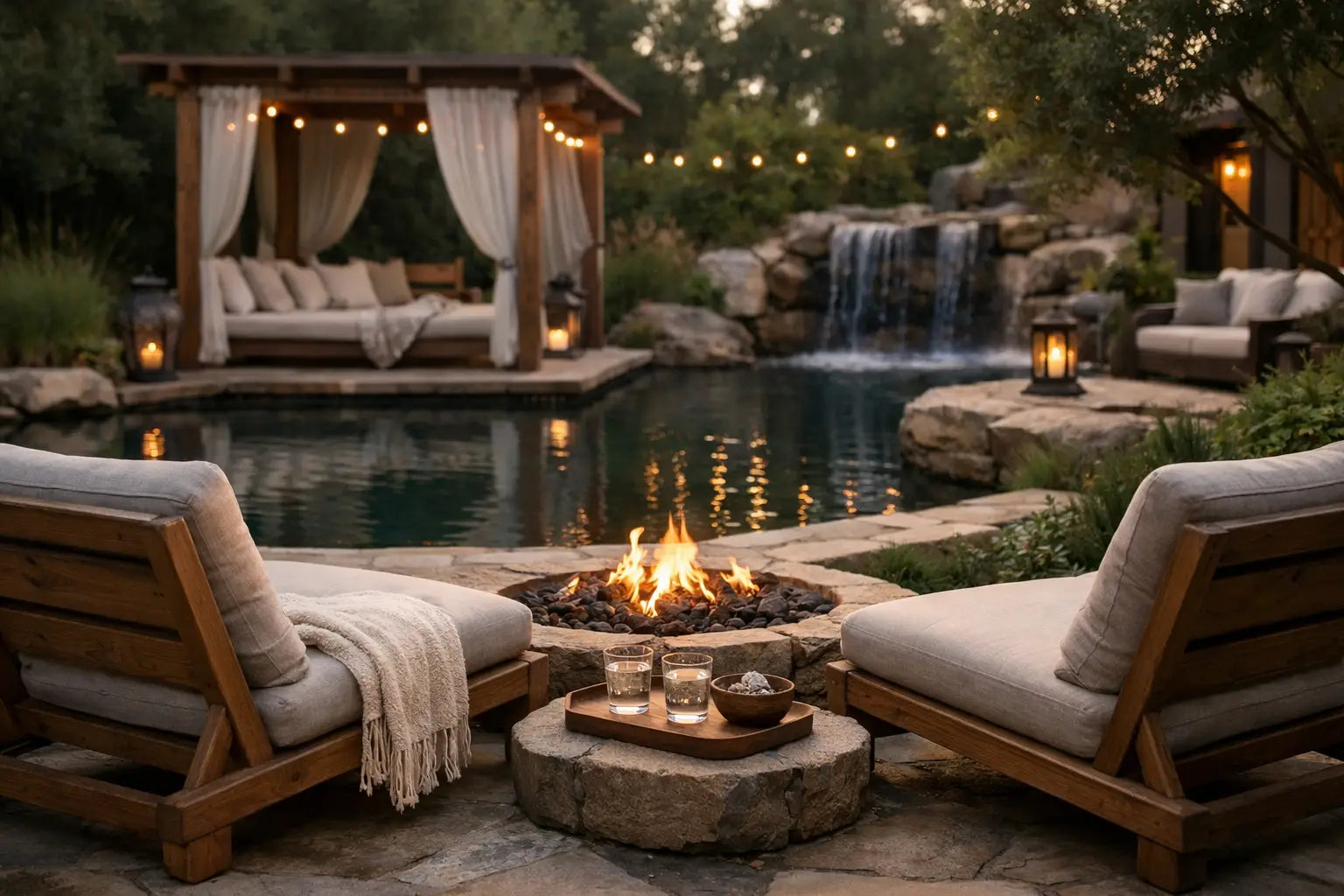
A retreat begins where the noise of the house falls away. It may be a quiet corner beneath mature trees, a sun-warmed patio at the edge of the garden, or an open area that is ready for a more intentional purpose. Learning how to create a backyard retreat is less about filling the yard with features and more about shaping a place that changes your pace the moment you step outside.
The most memorable outdoor spaces feel personal. They offer a reason to linger in the morning, a place to reset after work, and an atmosphere that makes an ordinary evening feel considered. Start with the feeling you want to return to, then let every design decision support it.
Begin With a Ritual, Not a Shopping List
Before choosing furniture, lighting, or a wellness feature, picture how the retreat will be used. A homeowner who wants a private place to decompress may prioritize a sauna, a shower, and deep seating. A vacation-rental host may build around a shared fire lounge and a striking glamping dome. A family may need a flexible outdoor studio that holds space for quiet work, movement, and weekend guests.
Choose one or two rituals that will anchor the space. It could be a morning cold plunge followed by coffee beneath a canopy. It could be sauna bathing at dusk, with a towel warmed nearby and a path lit softly back to the house. When the experience is clear, the layout becomes much easier to resolve.
Avoid trying to make every square foot perform every function. A backyard retreat is allowed to have negative space. An open view, a simple gravel path, or a small grove of grasses can create more calm than another piece of furniture.
Read the Landscape Before You Design It
Spend time in the yard at different hours before finalizing a plan. Notice where sunlight lands in the morning and late afternoon, where wind moves through, where water collects after rain, and which views deserve to be framed or screened. These details determine whether a beautiful space also feels comfortable enough to use often.
Privacy deserves particular attention. A retreat should feel sheltered without becoming closed off. Layered planting, slatted wood screens, evergreen hedges, and strategically placed structures can soften neighboring sightlines while maintaining airflow and a connection to the landscape. If the property has a distant view, preserve it as a focal point rather than blocking it with tall furnishings.
Consider the approach as carefully as the destination. A short path of stone, decomposed granite, or wood pavers signals a transition from daily life to restorative time. Even a modest yard gains a sense of occasion when guests move through a planted threshold before reaching the lounge, sauna, or studio.
Build around comfort in every season
A retreat used only during perfect weather will not become part of your routine. Plan for shade during hot months, warmth after sunset, and drainage during wet periods. Pergolas, mature trees, and architectural shade structures can make seating areas usable at midday. Fire features, radiant heaters, and wool throws extend evenings outdoors without making the space feel overbuilt.
In cooler climates, place the sauna or enclosed studio within a comfortable walk of the house, ideally along a stable, illuminated path. In warm climates, prioritize shade, cross-breezes, and a refreshing water element. The right choices depend on your region, but the goal is consistent: remove the small inconveniences that keep people indoors.
Create Layers for Rest, Renewal, and Gathering
The most inviting retreats are rarely one large patio with a collection of chairs. They have layers. Each layer offers a slightly different sensory experience, allowing the space to support solitude as naturally as it supports company.
Start with a primary destination. This may be a cedar sauna, an outdoor studio room, a poolside pavilion, or a sculptural glamping dome. A substantial focal point gives the landscape a center of gravity and makes the retreat feel intentional from the start.
Then create a nearby recovery zone. For a sauna setting, this could include a cold plunge pool, an outdoor rinse station, loungers, and hooks for robes. For a studio, it may be a small deck with low seating and a view into the garden. Keep this area simple enough that it still feels calm when used alone.
Finally, consider a social layer that sits slightly apart from the private ritual. A fire circle, dining table, or outdoor sectional gives friends and family a place to gather without interrupting the quieter parts of the retreat. Separating these zones by planting, changes in elevation, or a pathway makes even a compact property feel more expansive.
Choose Materials That Age Gracefully
Luxury outdoors is not about surfaces that look untouched forever. It is about materials that become more beautiful through use, weather, and time. Natural wood, stone, aged metal, linen-toned textiles, and hand-finished ceramic details bring warmth that synthetic finishes often cannot replicate.
For hardscape, select materials that feel good under bare feet and make sense in the local climate. Textured stone can offer traction near a plunge pool. Gravel provides drainage and a satisfying sound underfoot, though it may not suit areas where guests will roll luggage or where accessibility is a priority. Wood decking adds immediate warmth but requires thoughtful maintenance, particularly around moisture.
Limit the palette. A small number of compatible tones creates a composed atmosphere: weathered wood, soft charcoal, sand-colored stone, and green from the surrounding planting may be all you need. Let the landscape provide the color and movement.
Let planting do more than decorate
Planting is one of the most powerful ways to make a new structure feel rooted in place. Use a mix of evergreen structure, seasonal softness, and sensory plants. Fragrant herbs near a seating area, ornamental grasses that move in the wind, and flowering plants that attract pollinators make the retreat feel alive rather than staged.
Native and climate-adapted plants are often the wiser long-term choice. They typically require less water and intervention once established, though the best selection depends on soil, sun exposure, and local growing conditions. A local landscape professional can help shape a planting plan that will mature well around your investment.
Make Wellness Features Feel Integrated
A sauna, cold plunge, or outdoor studio can transform how a backyard is used, but it should feel like part of the property rather than an object placed on it. Align the structure with an existing view, use a related material palette, and leave enough breathing room around it for circulation and maintenance.
For a sauna and cold plunge pairing, think through the complete sequence. Where will you change? Where will towels, water, and sandals live? Is there a private place to cool down between rounds? Is the route safe when surfaces are wet? These practical considerations are what turn a dramatic wellness installation into a ritual you will genuinely keep.
A pre-designed structure can simplify the path to a polished result, while a fully custom build offers more freedom with size, orientation, and finishes. Neither approach is automatically better. The right option depends on the property, local regulations, timeline, and how tailored the experience needs to be. Tanari Earth approaches these features as part of a larger outdoor living environment, where restoration and design belong together.
Plan the Invisible Details Early
The most expensive revisions often come from what was not considered at the beginning. Before construction, confirm setbacks, zoning requirements, permits, utility access, drainage, and site access for delivery. An outdoor shower, sauna, plunge pool, or studio may require electrical work, water connections, a foundation, or drainage solutions that affect both placement and budget.
Lighting should also be planned early. The best outdoor lighting is felt more than seen. Use low pathway lights for safety, warm fixtures near doors and steps, and subtle uplighting to give trees or textured walls depth after dark. Keep bright overhead lighting limited. A retreat should not resemble a parking lot when the sun goes down.
Sound matters, too. Water moving gently through a fountain can mask neighborhood noise. Dense planting can soften sound, although it will not eliminate it. If music is part of the setting, choose discreet speakers and keep the volume considerate. Privacy is as much about atmosphere as it is about a fence line.
Give the Space a Reason to Be Used
The final layer is not a product or material. It is a habit. Keep the sauna ready with clean towels. Set out a carafe of water before an evening soak. Bring breakfast to the garden once a week, even if the rest of the yard is still evolving. A retreat becomes restorative through repetition.
Let the space develop with you. Add the chair that becomes your reading spot, the planting that reminds you of a favorite trip, or the lanterns you light when friends arrive. The goal is not a showroom-perfect backyard. It is a place that gives something back every time you enter it.

