
Cart
0
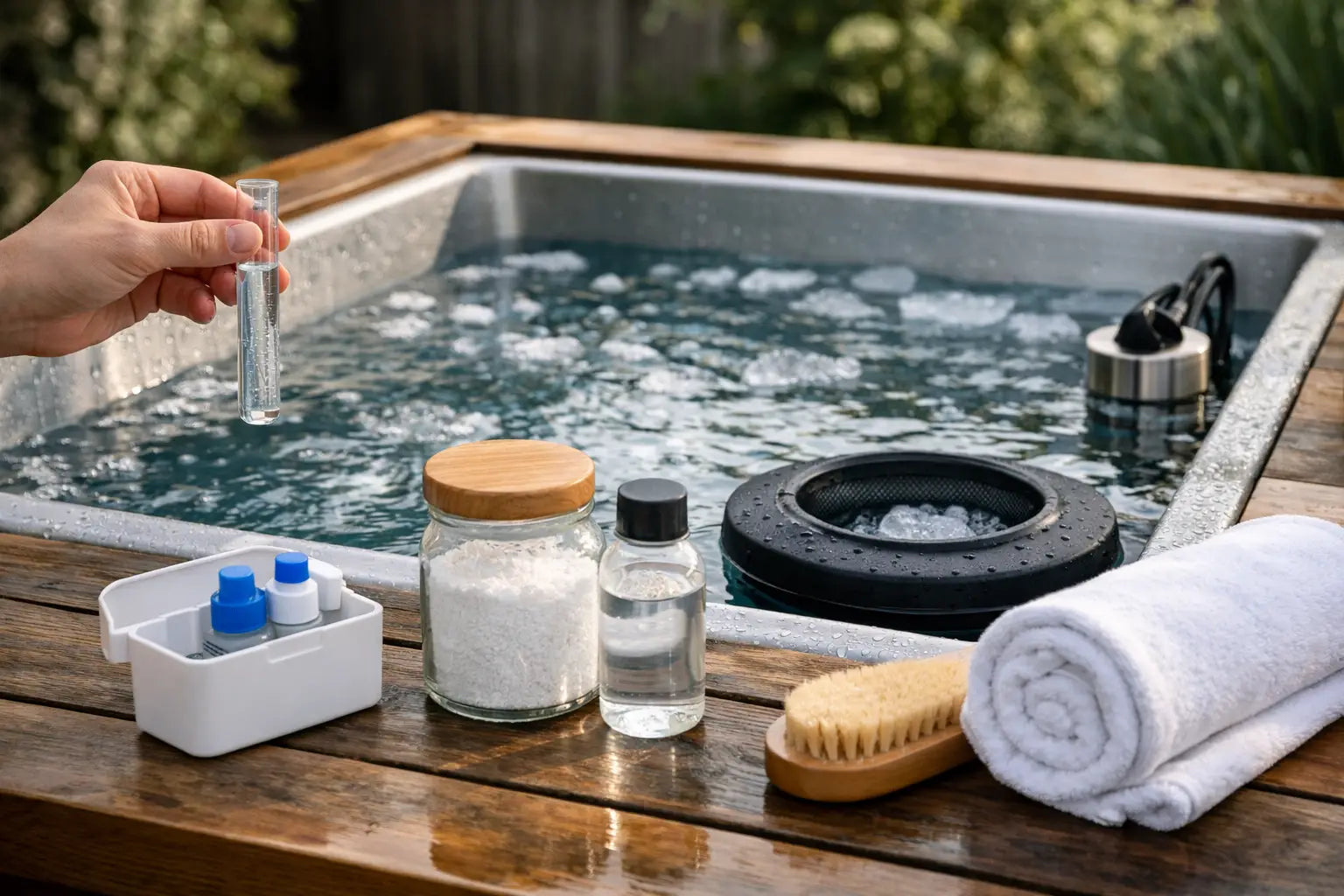
The pleasure of a cold plunge begins before you step in. Water that looks clear, smells neutral, and feels fresh turns a quick recovery practice into a ritual worth returning to. Thoughtful cold plunge water care protects that feeling, preserving the quiet luxury of a pool that is ready whenever your body asks for a reset.
Unlike a large swimming pool, a cold plunge holds a small volume of water that receives concentrated use. Body oils, sunscreen, perspiration, leaves, and airborne debris can change water quality quickly. The right routine is not fussy or complicated. It is a measured approach that keeps maintenance in the background and your outdoor sanctuary at the center.
Start With the Right Water Care System
Your ideal care routine depends on how your plunge is built, how often it is used, and whether it serves a household or guests. A filtered, recirculating plunge with a chiller can support a longer water cycle than a simple fill-and-drain tub. It also needs more consistent attention, because water remains in the system for longer.
For many home installations, a combination of mechanical filtration, a compatible sanitizer, and regular testing offers the most dependable path to clean water. Filters capture fine debris before it settles or creates a cloudy appearance. Sanitizer manages microorganisms that cannot be seen. Testing confirms that the balance is working as intended rather than relying on appearances alone.
Some owners prefer an ozone or ultraviolet component as part of their system. These can reduce the sanitizer demand and support cleaner water, but they are not always a replacement for a residual sanitizer in the water. Follow the equipment manufacturer’s guidance closely, especially when combining products. Materials, plumbing, covers, and chillers all have specific compatibility requirements.
A Cold Plunge Water Care Routine That Lasts
Consistency matters more than elaborate chemistry. A brief check before or after use keeps small adjustments from becoming a full maintenance session on a beautiful Saturday morning.
Before entering, make a quick visual assessment. The water should be clear, with no unusual odor, surface film, or visible debris. Use a skimmer or fine net for leaves and insects, particularly in a garden setting where the plunge is surrounded by trees and planting. If the water looks dull or feels slick, pause the ritual and address the cause before getting in.
Test water chemistry several times per week for a lightly used home plunge, and more often during periods of frequent use, warm weather, or guest stays. Test strips are convenient for regular checks, while a quality liquid test kit can offer more precise readings. Your manufacturer or water-care professional can recommend target levels for your particular system. As a general reference, many sanitized plunge systems aim for a pH around 7.2 to 7.8, though the appropriate range can vary by sanitizer and equipment.
Cold temperatures slow some chemical activity. This means a plunge that looks pristine can still need careful testing and sanitizer management. Do not assume cold water is self-cleaning, and do not add extra chemicals simply because water is cold. Make adjustments gradually, circulate the water, then retest according to the product instructions.
Protect the Water Before It Needs Treatment
The most elegant maintenance step is the one that prevents contamination in the first place. Encourage every bather to rinse off before entering, especially after a sauna session, workout, or time in the garden. A nearby outdoor shower makes this effortless and feels right at home in a considered wellness space.
Keep lotions, body oils, makeup, hair products, and fresh laundry detergent residue out of the water as much as possible. These additions can overwhelm a small plunge quickly, create foam, and make filtration work harder. If your routine includes a sauna and cold plunge, a quick rinse between the two is one of the simplest ways to preserve water quality.
A well-fitted cover is equally valuable. It keeps windblown debris out, reduces exposure to sunlight, and helps maintain a more stable temperature. Close it whenever the plunge is not in use, particularly overnight or during travel. In a vacation rental or hospitality setting, a cover also signals that the water is cared for intentionally between guests.
Give Filtration Its Due
Filtration is the quiet workhorse of cold plunge water care. Run the circulation system for the duration recommended by the manufacturer, and increase runtime after heavy use or a significant weather event. Water that moves through a clean filter is easier to balance and more inviting to enter.
Inspect the filter on a regular schedule. A clogged cartridge can reduce flow, strain equipment, and leave fine particles suspended in the water. Rinse or clean it using the method recommended for its material, then let it dry fully when appropriate. Having a spare cartridge on hand can make this task simple, especially for properties that welcome weekend guests.
Do not overlook the waterline, steps, fittings, and underside of the cover. Wipe these surfaces weekly with a product approved for your plunge material. The goal is to remove residue before it migrates back into the water. Avoid household cleaners, dish soap, or improvised treatments, which can create foam, damage finishes, or interfere with water chemistry.
Know When to Refresh the Water
Even a carefully maintained plunge needs fresh water eventually. There is no universal drain-and-refill schedule because usage varies widely. A private plunge used a few times each week may remain comfortable and balanced for substantially longer than one used daily by a family or a rotating group of rental guests.
Plan a water change when balancing becomes unusually difficult, the water remains cloudy after proper filtration and treatment, foam keeps returning, or there is a persistent odor. High levels of dissolved solids can also make water feel less fresh over time. When in doubt, refreshing the water is often more restorative than repeatedly trying to correct it.
Use a refill as an opportunity to reset the whole system. Drain according to local regulations and the manufacturer’s instructions, clean the shell and waterline with compatible products, inspect fittings and the cover, and clean or replace the filter as needed. Refill, circulate, bring the water to the desired temperature, and establish the recommended chemistry before use.
Seasonal Care for an Outdoor Retreat
Outdoor water care shifts with the seasons. In spring and fall, pollen, needles, and leaves can increase the need for skimming and filter cleaning. Summer often brings more frequent use, sunscreen, and warmer ambient temperatures, all of which can raise sanitizer demand. Winter can be wonderfully suited to cold plunging, but freezing conditions require attention to plumbing, circulation, and manufacturer-specific freeze protection.
If you will be away from the property for an extended period, decide whether to maintain the system or winterize it. The right choice depends on your climate, the plunge design, and whether someone can check water and equipment while you are gone. A high-end outdoor installation deserves a plan that protects both the water and the craftsmanship behind it.
When the Water Tells You Something Is Off
Cloudiness usually points to a filtration issue, unbalanced water, heavy bather load, or a combination of all three. Start by removing debris, checking the filter, testing the water, and confirming adequate circulation. A sharp chemical smell does not necessarily mean there is too much sanitizer. It can indicate that sanitizer is reacting with contaminants and needs proper correction.
Green, slippery, or discolored water calls for a more deliberate response. Stop using the plunge, test the water, clean the filter and surfaces, and follow the treatment process recommended for your system. If you cannot identify the issue or it returns repeatedly, a qualified pool or spa professional can help diagnose equipment, source-water, or chemistry problems without guesswork.
For shared or hospitality use, set a more conservative care schedule. Higher bather turnover calls for more frequent testing, cleaning, and water changes, along with clear pre-plunge shower expectations. A guest should never have to wonder whether the water is fresh. That confidence is part of the experience.
A cold plunge is a small, powerful invitation to slow down, breathe deeply, and return to yourself. Care for its water with the same intention you bring to the ritual, and your outdoor retreat will remain a place that feels clear, calm, and ready for the next restorative moment.

