
Cart
0
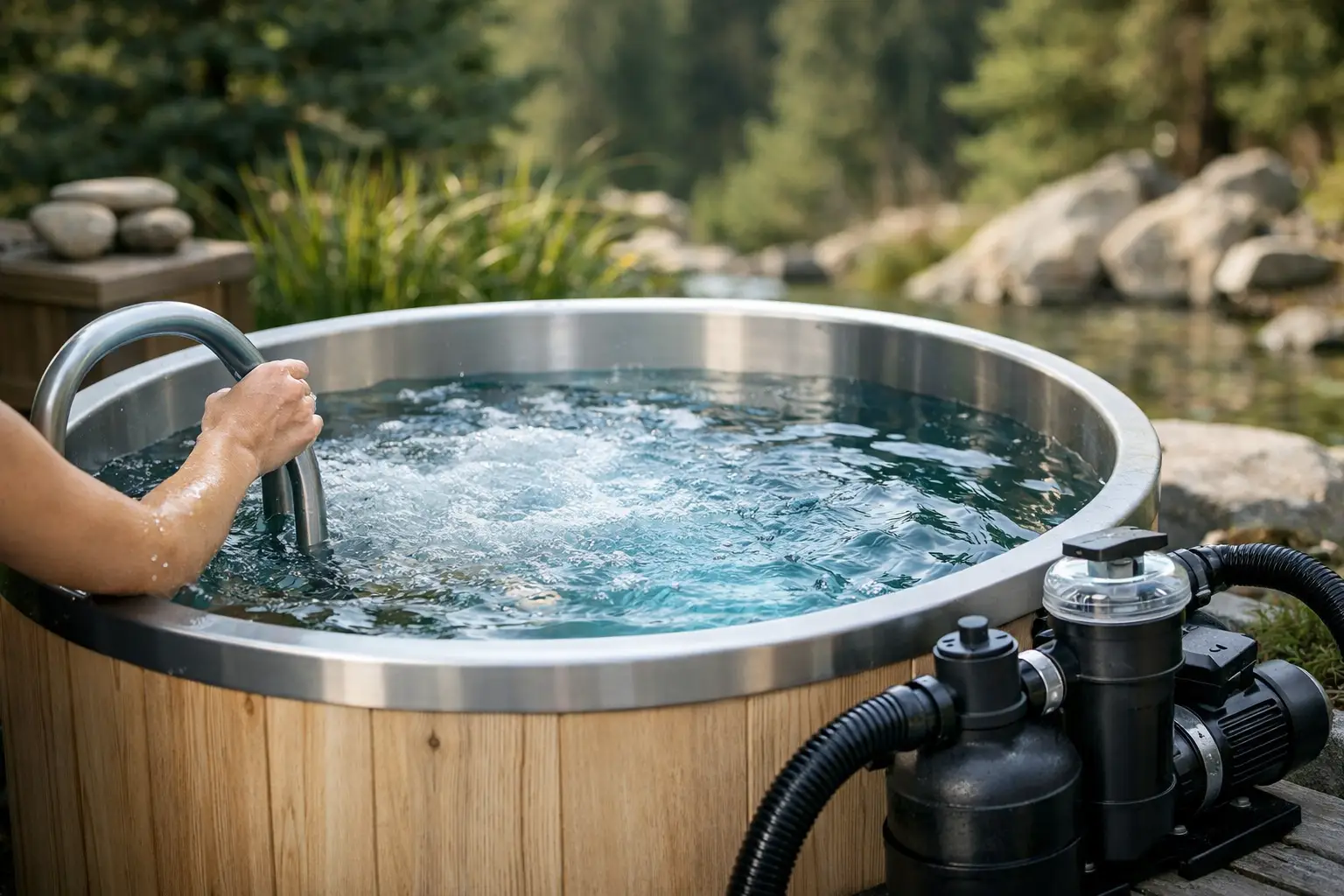
A cold plunge should feel like a clean reset: still water, crisp air, and a moment that belongs entirely to you. Cold plunge filtration is what protects that feeling between sessions. It is not the most visible part of an outdoor wellness space, but it determines whether your plunge feels restorative or becomes another maintenance task waiting on the weekend.
For a private backyard retreat, a guest-facing rental, or a hospitality setting, clear water is part of the experience. Thoughtful filtration helps preserve the visual calm of the plunge, extends the life of equipment, and makes regular care far more manageable.
What Cold Plunge Filtration Actually Does
Filtration removes the physical material that finds its way into water: body oils, hair, skin cells, leaves, pollen, dust, and fine debris carried in from the outdoors. A filter does not, by itself, sanitize the water. That distinction matters.
A well-designed system has several parts working together. Circulation moves water through the plumbing and filter. The filter captures particles. A sanitation method addresses microorganisms. Water balancing keeps sanitizer effective and protects surfaces and equipment. When one part is neglected, the others have to work harder.
Cold water can look deceptively clean. Lower temperatures slow bacterial growth compared with a warm spa, but they do not eliminate it. Nor do they stop debris from accumulating or oils from forming a film along the waterline. Clear water is encouraging, but it should not be the only measure of water quality.
The Filtration Setup That Fits Your Routine
The right cold plunge filtration setup depends less on a single product feature and more on how you intend to use the tub. A solo homeowner plunging a few times a week has very different needs than a vacation-rental host welcoming several guests over a weekend.
Cartridge filters for straightforward care
Cartridge filters are common in compact cold plunges because they are effective, relatively quiet, and easy to service. Water passes through pleated filter media, which catches fine particles without the need for a large external equipment pad.
Their convenience comes with a rhythm of care. Cartridges need to be rinsed regularly and deep-cleaned periodically, then replaced when the material no longer returns to a clean condition. Keeping a spare cartridge on hand makes this simple: one can dry after cleaning while the other is in service.
For many residential setups, a quality cartridge system offers the best balance of discreet design and practical upkeep. It is especially well suited to an outdoor oasis where the equipment should support the atmosphere rather than dominate it.
Sand and glass media for higher-use settings
Sand and glass media filters are more often found in larger pools and higher-volume installations. They can handle significant bather loads and are designed to run reliably over longer periods. Glass media is often favored for its fine filtration capability and long service life.
The trade-off is scale. These systems require more plumbing, space, and planning, and they may be excessive for a small, personal plunge. They are worth considering when a cold plunge is part of a larger wellness amenity, a commercial-style retreat, or an active guest property where water sees frequent use.
Skimming matters outdoors
A fitted cover is one of the most effective filtration accessories you can choose. It reduces leaves, insects, pollen, rainwater, and airborne debris before they ever reach the filter. For a plunge beneath trees or near a garden, that can substantially reduce cleaning time.
If your setup includes a skimmer, keep its basket clear. A skimmer catches larger material first, protecting the main filter from unnecessary load. It is a small habit with an outsized effect on water clarity.
Circulation Is the Quiet Work Behind Clear Water
A filter cannot clean water that never reaches it. Circulation is what turns filtration from a passive component into an active system.
The ideal runtime depends on the size of the plunge, pump flow rate, outside conditions, and how frequently it is used. Many owners choose daily circulation cycles, with longer run times during periods of heavy use or when the plunge is exposed to wind, trees, or frequent guests. Rather than treating a preset schedule as universal, use it as a starting point and adjust based on how the water performs.
Look for consistent movement at the surface and no stagnant corners. When the pump runs, water should be drawn through the filtration path efficiently, without excessive noise or visible air entering the line. A chiller with an integrated pump and filter can create a clean, compact installation, while an external equipment configuration may offer more flexibility for a custom-built wellness area.
Placement helps, too. Situate the plunge where it feels connected to the landscape, but avoid placing it directly beneath heavy leaf drop if possible. A few feet of thoughtful positioning can mean less debris, less chemical demand, and more time spent enjoying the ritual.
Filtration and Sanitation Must Work Together
Filtration captures particles, but sanitation handles what cannot be seen. The method may be chlorine, bromine, ozone, UV, or a combination, depending on the system and your maintenance preference. Ozone and UV can be valuable secondary tools, yet they generally do not replace the need for an approved residual sanitizer in the water.
This is where a simple testing routine creates confidence. Test sanitizer level and pH consistently, especially after heavy use, a storm, or an extended period with the cover off. Cold plunge owners sometimes assume low temperatures allow them to ignore water chemistry. In reality, balanced water is what helps the filtration system do its work without leaving behind cloudiness, scale, corrosion, or an unpleasant odor.
Follow the equipment manufacturer’s recommendations and local guidance for your chosen sanitation system. If the plunge serves paying guests or is part of a shared property amenity, professional water-management support may be appropriate. Higher bather load calls for more frequent testing, cleaning, and water replacement.
A Refined Maintenance Rhythm
The most beautiful outdoor spaces are often the ones supported by quiet, repeatable routines. Cold plunge care does not need to be complicated, but it does need consistency.
Before each session, take a moment to scan the water and waterline. Remove visible debris and confirm that the water looks and smells fresh. After use, especially with multiple bathers, replace the cover promptly. A quick shower before plunging also makes a meaningful difference by keeping lotions, sweat, sunscreen, and natural body oils out of the water.
Once or twice a week, rinse the filter cartridge and empty any skimmer basket. Test water chemistry on a schedule that matches use. Deep-clean cartridges according to the manufacturer’s directions, because a filter can look acceptable on the surface while oils and mineral deposits remain lodged in the media.
Drain-and-refill timing varies. A lightly used, covered plunge with attentive filtration and balanced water may go longer between changes than an uncovered unit used daily by several people. Watch for persistent foam, dull water, recurring imbalance, or a filter that clogs quickly. Those are signs that fresh water may be the more elegant solution than adding more treatment products.
Design for the Experience, Not Just the Equipment
A cold plunge is most inviting when the maintenance elements are considered from the beginning. Plan a discreet home for the chiller, filter housing, hoses, and electrical connections. Allow enough access for cleaning and service without making those components the visual focus.
Natural screening, a matching enclosure, or a thoughtfully placed bench can soften the functional side of the installation. Nearby towel storage, a rinse shower, and a sheltered place to set down a robe turn a cold plunge from a standalone feature into a complete ritual. For properties designed around sauna bathing, position the plunge so the transition from heat to cold feels easy, private, and safe.
Tanari Earth approaches outdoor wellness this way: not as a collection of equipment, but as a place you will want to return to. Filtration may be behind the scenes, yet it supports every visible detail, from the clarity of the water to the ease of inviting someone to share the space.
When to Ask for Professional Help
Some issues call for more than another filter rinse. Repeated cloudy water, a sudden loss of flow, leaks around fittings, unexplained chemical demand, or a pump that runs loudly or intermittently should be assessed before the problem grows. Seasonal winterization and startup are also sensible times to bring in a qualified technician, particularly in regions with freezing temperatures.
If you are planning a custom cold plunge as part of a larger landscape or hospitality project, involve the installer early. Access to power, drainage, ventilation around equipment, surface preparation, and service clearances all influence how effortlessly the system will perform over time.
The goal is not to turn your wellness ritual into a laboratory. Give the water a little consistent attention, keep the filter clean, and let the rest of the experience remain what it was meant to be: a clear, cold pause in the open air.

