
Cart
0
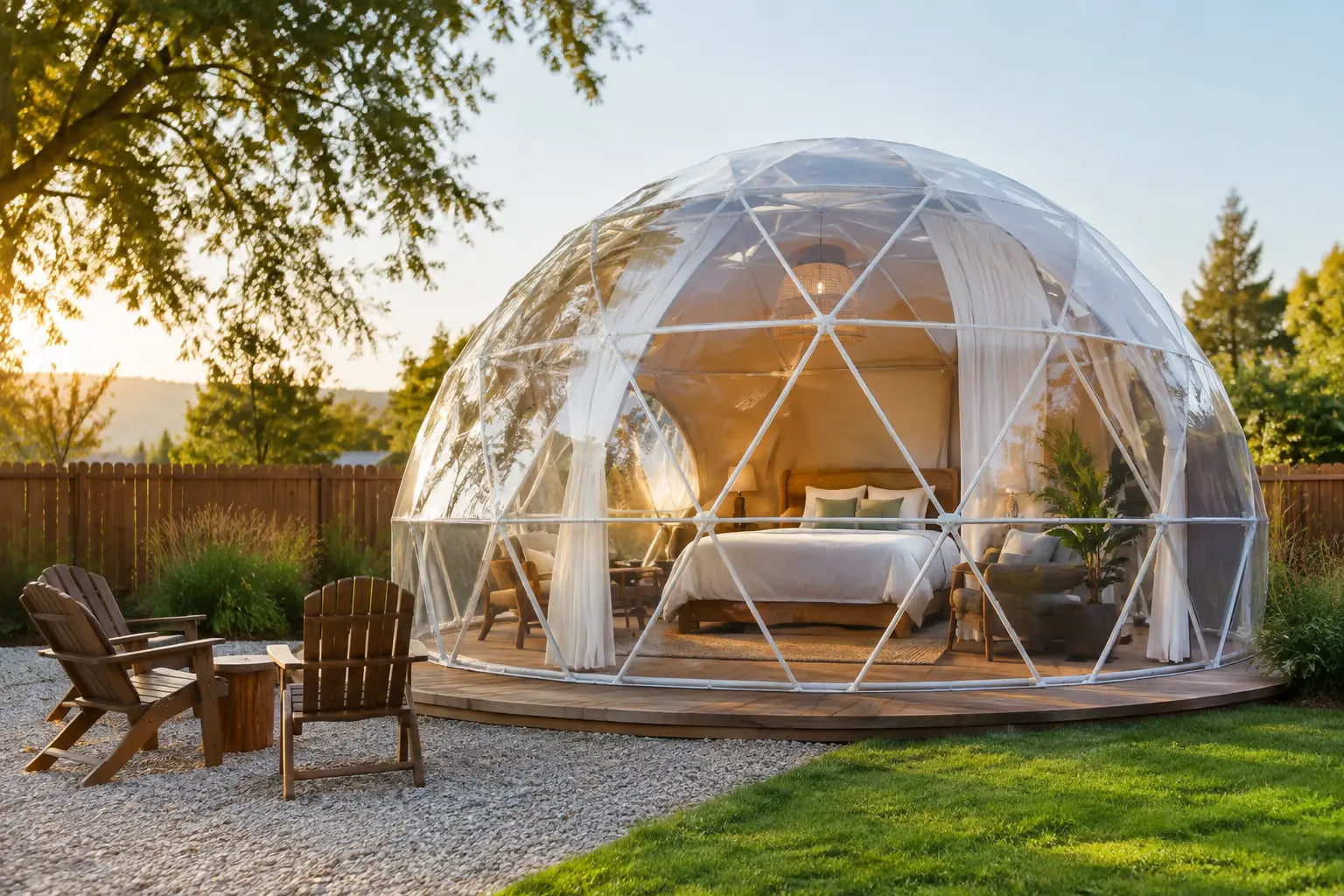
A backyard dome can turn an underused corner of your property into somewhere you genuinely want to linger: a candlelit guest suite, a quiet yoga room, a private dining space, or a restorative retreat beside the sauna. The question of how to choose a backyard dome is less about finding the largest structure or the lowest price and more about choosing one that belongs to your landscape, supports the way you live, and remains inviting in every season.
The right dome creates a feeling of arrival. It frames a view, softens the boundary between indoors and out, and gives ordinary time outside a little more intention. Start there, then let the practical details shape the decision.
Begin With the Experience You Want to Create
Before comparing diameters, window panels, or frame materials, decide what the dome needs to do. A dome for occasional evening dinners has very different requirements from one intended as a year-round guest accommodation or a revenue-generating glamping stay.
For a personal wellness retreat, privacy and atmosphere may be the priority. You might place it near a cold plunge or garden path, with room for lounge chairs, floor cushions, and gentle lighting. If it will serve as a guest room, sleep comfort, ventilation, weather protection, and access to a nearby bathroom become more significant. For a studio, consider headroom, acoustics, power, and whether the layout can hold a desk, exercise equipment, or a treatment table without feeling crowded.
Think about the moments you want the structure to hold. Morning tea under the trees, an unhurried post-sauna rest, a family sleepover, or a beautiful overnight experience for guests all suggest different priorities. A dome is most successful when its purpose is clear before its specifications are chosen.
How to Choose a Backyard Dome for Your Site
A beautiful dome can feel out of place if the site has not been considered with the same care. Walk your property at different times of day. Notice where the sun rises, where it becomes intense in the afternoon, how wind moves through the yard, and which views are worth preserving.
A south- or west-facing location can deliver wonderful warmth and golden-hour light, especially in cooler regions. In a hot climate, that same exposure may require shade trees, a canopy, reflective covers, or more substantial ventilation. Clear panels create the immersive appeal many owners love, but they also amplify sun and glare. The best placement often balances an open view with some natural cover.
Privacy deserves equal attention. A dome placed too close to a neighboring fence or visible from the main house may not offer the sense of retreat you imagined. Layered planting, a screen wall, or a thoughtful angle can make a meaningful difference without closing off the landscape.
Also consider the route to the dome. A short, graceful path can make the experience feel considered, particularly at night. But if guests will carry luggage, if you plan to use the structure in rain, or if accessibility is a concern, choose a route that is level, well-lit, and practical. The most serene spaces tend to be easy to reach.
Let the Foundation Follow the Ground Conditions
Your foundation is not the glamorous part of the project, but it determines how well the dome performs over time. The ideal solution depends on soil, slope, drainage, local weather, and whether you want a permanent or more flexible installation.
A level deck or platform creates a polished, finished appearance and can provide room for insulation, electrical routing, and a clean interior floor. Gravel bases may suit lighter-duty or seasonal uses when properly prepared, while concrete can make sense for a long-term, highly weather-exposed installation. On a sloped or delicate site, a raised platform may preserve drainage and reduce disruption to the land.
Avoid placing a dome in the lowest point of the yard simply because it is out of sight. Water collects there, and moisture management becomes an ongoing concern. Grade the site so water moves away from the structure, and plan for the runoff created by nearby roofs, patios, and hardscape.
Choose a Size That Supports Real Life
Dome dimensions can be deceptively difficult to visualize. The curved walls mean usable floor area matters more than the diameter alone. A compact dome can feel generous as a reading nook or meditation space, yet become tight quickly once a bed, side tables, storage, and circulation are added.
For a lounge or wellness room, map out the footprint of the pieces you expect to use. For a sleeping dome, account for the bed size, space to walk around it, luggage, seating, and any heating or cooling equipment. If the dome will host guests, a little extra room is often what makes it feel like a retreat rather than a novelty.
Height matters as well. A taller dome has a more dramatic, airy presence and may better accommodate pendant lighting or a canopy bed. That said, larger volume can require more energy to heat and cool. Choose scale based on the experience, not just visual impact.
Look Closely at Materials, Weather Ratings, and Comfort
A backyard dome is exposed to sun, rain, wind, debris, and temperature swings every day. Materials should be selected for the climate you actually have, not the mild weather you wish you had.
Frames are commonly made from powder-coated steel, aluminum, or treated wood components. Look for corrosion resistance, secure connectors, and a design engineered for your regional wind and snow conditions. If you live near the coast, humidity and salt air make durable finishes especially valuable. In snow country, confirm both snow-load capacity and the manufacturer’s guidance for clearing accumulation.
The cover or glazing determines much of the dome’s comfort and longevity. Clear PVC offers a striking view of the sky and surrounding landscape, while more insulated or opaque materials can provide shade, privacy, and better thermal performance. Some designs combine transparent viewing sections with solid panels where protection is most needed.
Ask practical questions before making a decision: How does the material handle ultraviolet exposure? Is it flame-retardant where required? Can individual panels be replaced? What does the warranty cover, and what maintenance is expected? Premium materials may cost more initially, but clarity, weather resistance, and a well-finished appearance tend to matter long after installation day.
Plan for Four-Season Use From the Start
A dome that is comfortable for one perfect weekend is not necessarily suited to year-round use. Ventilation is essential in warm weather, especially with transparent panels. Windows, screened openings, roof vents, and quiet fans help release trapped heat and reduce condensation.
For cold seasons, insulation beneath the floor can be as important as the wall material. A carefully sized electric heater, radiant floor system, or climate-control unit can extend the season, but it must be matched to the dome’s volume and heat loss. In humid climates, dehumidification and airflow protect textiles, furnishings, and the structure itself.
If you plan to add power, lighting, heating, or plumbing, involve qualified local professionals early. Thoughtful electrical placement keeps cords out of sight and allows the interior to retain its calm, uncluttered feeling.
Treat Permits and Local Rules as Part of the Design
Do not assume a dome is exempt from local requirements because it is prefabricated or temporary-looking. Rules vary widely by city, county, homeowners association, intended use, size, utility connections, and foundation type.
A small seasonal garden structure may have a simple path forward, while a dome used for overnight guests, short-term rentals, or a business can trigger additional zoning, building, fire-safety, and sanitation requirements. Setback rules may dictate how close it can sit to property lines, other structures, or protected areas.
Checking these details before ordering protects both the investment and the experience you want to create. It may also guide your choice of size, location, and whether the structure should remain more flexible or be designed as a permanent destination.
Design the Interior With Restraint
The appeal of a dome comes from its sense of openness. Resist the urge to fill every inch. A few high-quality elements usually feel more luxurious than a crowded collection of furniture.
Choose materials that echo the setting: warm wood, linen, wool, natural fiber rugs, stone, and soft layered lighting. For a wellness-focused space, consider a lounge chair, low table, plush throws, and concealed storage for towels or yoga props. For overnight stays, prioritize a comfortable bed, blackout options, bedside lighting, and places for guests to put the small things that make a stay feel cared for.
Lighting should be warm and low-glare. The goal is to preserve the evening sky, not compete with it. A dimmable interior glow, path lighting, and a few lantern-like accents can make the walk to the dome feel as restorative as the space itself.
The finest backyard dome is not merely a structure in the yard. It is an invitation to step outside, slow the pace, and make more room for the rituals that restore you.
